Shipwrecked, Sick, and Saved by a Typewriter: The Wreckage That Made America's Greatest Playwright

Shipwrecked, Sick, and Saved by a Typewriter: The Wreckage That Made America's Greatest Playwright
There's a version of the Eugene O'Neill story that starts in a sanatorium bed in 1912, a twenty-three-year-old man staring at the ceiling of a Connecticut tuberculosis ward with nothing to do but think. That version is true. But it leaves out everything that put him there — and everything that made what came next so extraordinary.
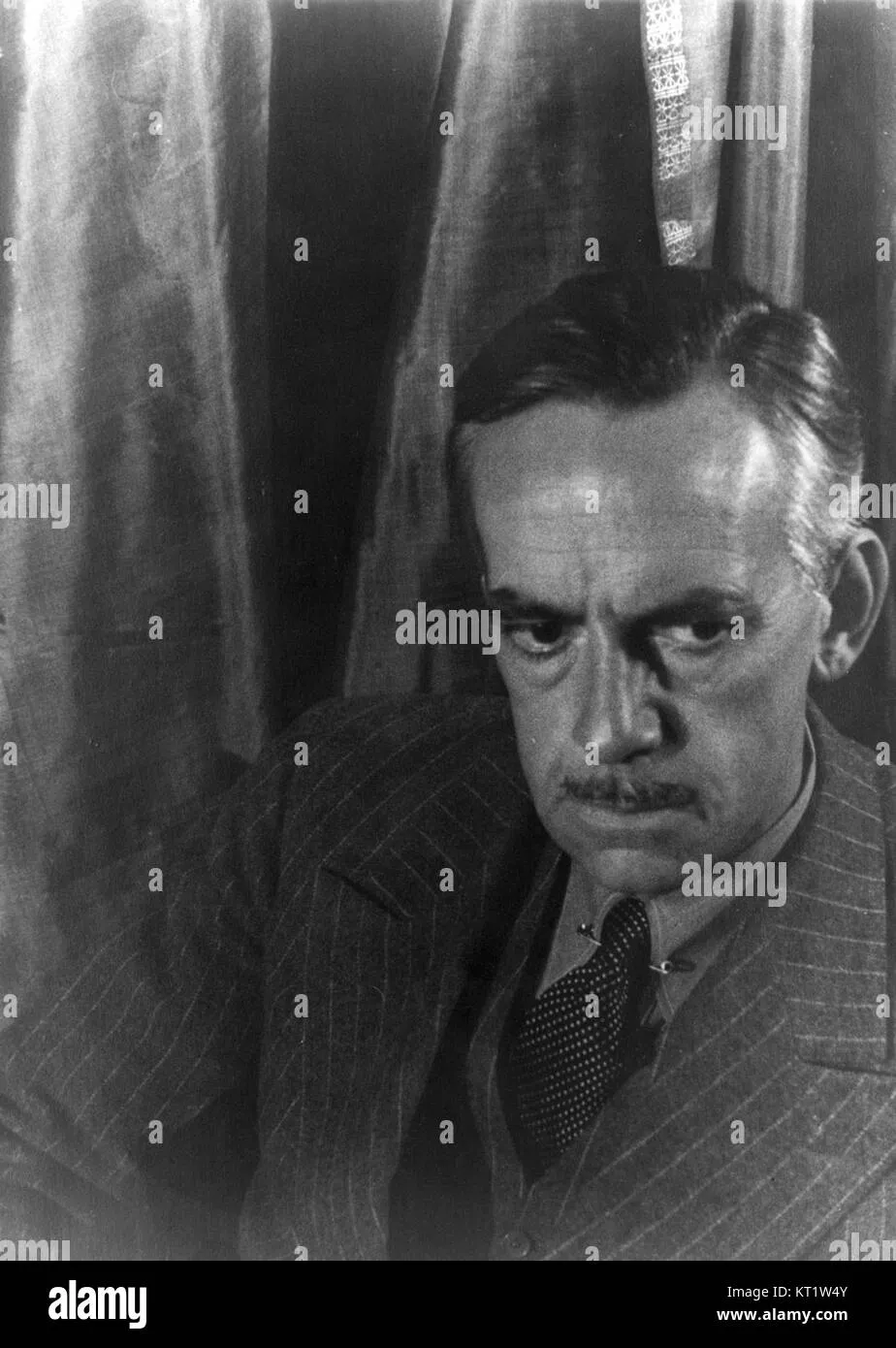 Photo: Eugene O'Neill, via c8.alamy.com
O'Neill didn't arrive at greatness through talent alone. He arrived through catastrophe. And understanding that changes everything about how we read the man, the plays, and the Nobel Prize that America eventually handed him like it had been obvious all along.
Born Into the Theater, Running From It
Eugene O'Neill came into the world on October 16, 1888, in a Broadway hotel room — not as a metaphor, but literally. His father, James O'Neill, was one of the most famous stage actors in America, a man who'd built a career and a modest fortune playing the Count of Monte Cristo night after night for decades. The theater was the family business. And Eugene wanted nothing to do with it.
He lasted a year at Princeton before getting himself thrown out. He got married impulsively, had a son he barely acknowledged, and then essentially disappeared — first into a gold-prospecting venture in Honduras that went nowhere, then onto merchant ships sailing to South America and back, hauling cargo and collecting stories he didn't yet know he needed.
These weren't romantic adventures. O'Neill was drinking heavily, sleeping in waterfront flophouses in Buenos Aires, and working just enough to fund the next bottle. He called this period his time among the "sea bums," and he didn't romanticize it even later, when his plays made those years famous. It was grim, unglamorous, and exactly the kind of life that a playwright who wanted to write about real human suffering needed to have lived.
The Bars Nobody Writes About
When O'Neill came back to New York, he settled into a dive bar called Jimmy the Priest's, a waterfront saloon so bleak that it would later become the direct inspiration for one of his most devastating plays, Anna Christie. The clientele were drifters, sailors, and men who had given up on almost everything. O'Neill fit right in.
He wasn't writing. He wasn't planning. He was drinking himself sideways and occasionally picking up work as a reporter for a New London, Connecticut newspaper — a job he was spectacularly bad at. He attempted suicide at least once during this stretch, a fact his biographies tend to mention quickly before moving on. It shouldn't be moved on from. It tells you exactly how far down he had gone.
And then his lungs gave out.
The Sanatorium as Classroom
In the winter of 1912, O'Neill was diagnosed with tuberculosis and checked into Gaylord Farm Sanatorium in Wallingford, Connecticut. He spent six months there. And those six months, more than any other period in his life, are where the playwright was actually born.
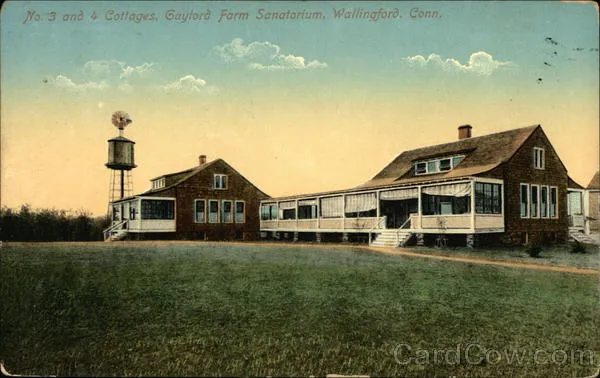 Photo: Gaylord Farm Sanatorium, via www.cardcow.com
Forced off alcohol and forced into stillness, he started reading with ferocious intensity — Strindberg, Ibsen, the Greek tragedians. He started thinking about what theater could be if it stopped being polite. If it stopped pretending that people were better than they were. He had spent years living among people who were broken, desperate, and achingly human, and he had never once seen any of it reflected on an American stage.
He decided to change that.
The Provincetown Miracle
O'Neill left the sanatorium and started writing — short plays at first, raw and rough around the edges, set on ships and in waterfront dives because those were the only worlds he knew with any intimacy. In 1916, a scrappy experimental theater company in Provincetown, Massachusetts, took a chance on one of his one-act sea plays. Then another. Then another.
The Provincetown Players were exactly the kind of outfit that could appreciate what O'Neill was doing — small, broke, uninterested in Broadway conventions, and willing to put work onstage that made audiences uncomfortable. They gave him a home. He gave them a reason to exist.
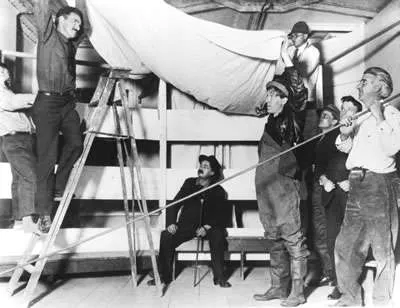 Photo: Provincetown Players, via www.newenglandhistoricalsociety.com
Within a few years, he was writing full-length plays. Within a decade, he was winning Pulitzer Prizes — four of them, a record that still stands. In 1936, he became the only American playwright ever to win the Nobel Prize in Literature.
What the Flophouses Actually Taught Him
The thing about O'Neill's plays — Long Day's Journey Into Night, The Iceman Cometh, Mourning Becomes Electra — is that they don't feel like they were written by someone who studied suffering from a safe distance. They feel like confessions. Like testimony.
That's because they were. The alcoholic patriarch in Long Day's Journey is his father. The morphine-addicted mother is his mother. The drifting, self-destructive younger son is himself. He didn't invent these people. He survived them.
The flophouses gave him the working-class voices. The merchant ships gave him the isolation and the physical brutality of labor. The bars gave him the philosophy of men who had lost everything and were still, somehow, talking. The sanatorium gave him the time to understand what all of it meant.
No drama school offers a curriculum like that.
A Ruin That Refused to Stay Ruined
There's a tendency, when we tell stories about great artists, to sand down the worst parts. To make the suffering feel purposeful and clean, like it was all leading somewhere. O'Neill's story resists that. The years he spent at rock bottom weren't secretly productive. They were genuinely terrible, and he never fully escaped them — he struggled with alcoholism for most of his adult life and died in 1953, largely isolated, his hands shaking too badly to write.
But here's what's true: the work he made was only possible because of the life he'd lived. Not despite it — because of it. The wreckage was the raw material. The ruin was the education.
America's greatest playwright didn't come from a conservatory or a wealthy patron's drawing room. He came from a tuberculosis ward and a waterfront bar, with salt in his lungs and years of hard living behind him.
That's not a cautionary tale. That's an origin story.