She Printed the Truth When Nobody Wanted to Read It: The Radical Life of Charlotta Bass

There's a particular kind of courage that doesn't announce itself. It doesn't march under a banner or wait for the cameras. It just shows up every week, sets the type, runs the press, and drops the paper on doorsteps that powerful people wish it would never reach.
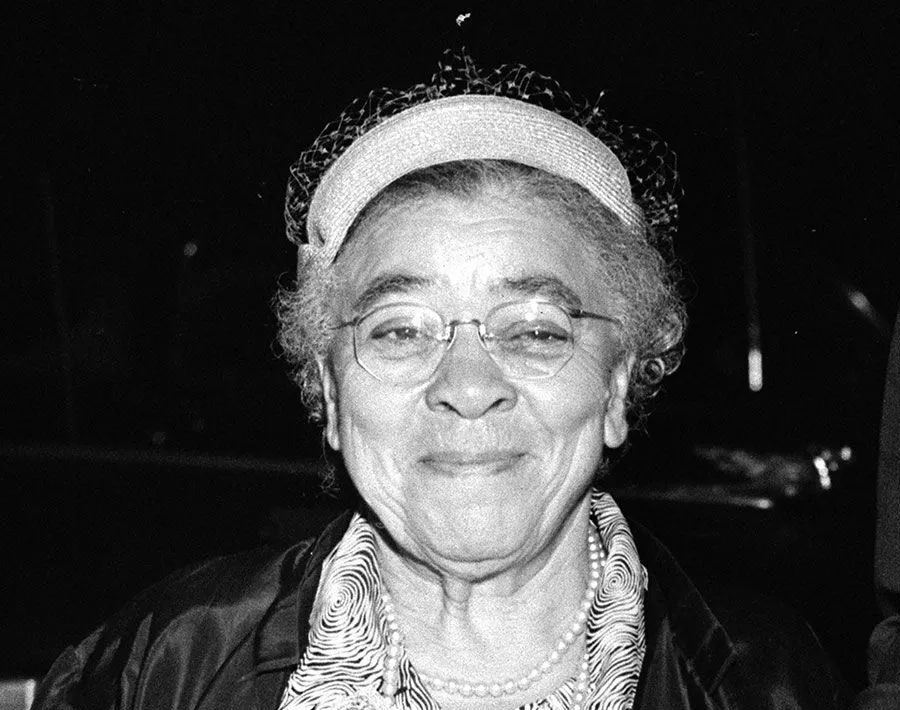 Photo: Charlotta Bass, via basslab.usc.edu
That was Charlotta Bass. And for most of the twentieth century, Los Angeles had absolutely no idea what to do with her.
 Photo: Los Angeles, via millionenfakten.de
A Long Way From South Carolina
She was born Charlotta Spears in 1874 in Sumter, South Carolina — a place and a time that offered Black women approximately zero paths to anything resembling influence. She didn't stay long enough to accept that verdict. By her early thirties she'd made her way west to Los Angeles, chasing the particular myth that California sold to anyone willing to believe it: that the old rules didn't apply out here.
 Photo: Sumter, South Carolina, via assets.isu.pub
In 1910, she took a job selling subscriptions for a small Black-owned paper called the California Eagle. Within two years, the paper's founder was dead and Bass was running the whole operation. She bought it outright — not because she had the money, exactly, but because she had the nerve — and would go on to edit and publish it for the next forty years.
Forty years. Think about what that span contains. Two world wars. The Great Depression. The rise of Hollywood. The birth of the modern civil rights movement. Through all of it, Charlotta Bass was at her desk, deciding what Los Angeles needed to hear.
The Paper as a Weapon
The California Eagle wasn't a hobby. It wasn't a community bulletin. Under Bass, it became something closer to a battering ram.
She used its pages to go after the Ku Klux Klan, which had a surprisingly robust presence in 1920s Los Angeles — something the city's boosters preferred to leave out of the Chamber of Commerce brochures. She covered redlining, the practice by which banks and real estate agents systematically locked Black families out of entire neighborhoods, long before the term entered mainstream conversation. She wrote about police brutality against Black Angelenos with a directness that made city officials deeply uncomfortable.
They tried to shut her up in the ways powerful people usually try. Advertisers were pressured to pull out. Legal threats materialized. She was surveilled by federal agents who found her anti-war stance during World War I suspicious enough to warrant attention from J. Edgar Hoover's Bureau of Investigation. None of it worked. The paper kept coming out.
What made Bass so effective wasn't just her stubbornness, though she had that in abundance. It was her understanding that a printing press, in the right hands, is a form of infrastructure. Every edition of the Eagle that landed in a Black household in Los Angeles was a small act of insistence — proof that someone was watching, documenting, refusing to let things slide into silence.
The Fight Nobody Covered
One of the less-told chapters of Bass's story is her campaign against restrictive housing covenants — the legal mechanisms that kept Black families penned into specific neighborhoods regardless of their income or ambitions. Bass didn't just write about it. She helped organize legal challenges and community resistance campaigns that predated the more celebrated battles of the civil rights era by decades.
When a Black family named the Tabors tried to move into a white neighborhood in Los Angeles in the 1940s and faced mob harassment and legal threats, Bass was there. She covered it, agitated around it, and helped connect the family with legal support. This was the work — unglamorous, grinding, and mostly unacknowledged by the history books that later compressed the civil rights movement into a handful of famous moments.
She also ran for office. Multiple times. She ran for Los Angeles City Council. She ran for Congress. She lost both races, which surprises no one who understands the political landscape of mid-century America. But she ran, which was itself a statement.
1952: A Nomination That Shouldn't Have Been Possible
By 1952, Charlotta Bass was nearly eighty years old. She'd sold the Eagle a few years earlier, but she hadn't stopped. If anything, she'd gotten more radical — drawn toward the Progressive Party, which was willing to say things about race, labor, and American foreign policy that the two major parties treated as unspeakable.
The Progressive Party nominated her as their candidate for Vice President of the United States.
Let that settle for a moment. A Black woman. 1952. On a national ticket. Four years before Rosa Parks refused to give up her seat. Twelve years before the Civil Rights Act. Charlotta Bass stood at the podium at the Progressive Party convention and said, with characteristic directness: "I stand before you, a candidate for the second highest office of this land, and I am a woman. And I am a Black woman." She said it not as a confession but as a declaration.
The ticket didn't win. Nobody expected it to. But Bass used the platform to talk about things the mainstream candidates were carefully avoiding — the Korean War, McCarthyism, segregation, the systemic economic exclusion of Black Americans. She was, as she'd always been, less interested in winning the room than in forcing the room to confront what it would rather ignore.
What She Left Behind
Charlotta Bass died in 1969, which means she lived long enough to see the Voting Rights Act, the Fair Housing Act, and the beginnings of a Black political movement that owed more to her groundwork than it usually admitted.
She isn't a household name. She probably should be. The history of American civil rights tends to organize itself around dramatic confrontations and charismatic leaders, and Bass's story doesn't fit neatly into that frame. She was a newspaper editor. She was an organizer. She was a woman who understood that power, when you don't have it, has to be built incrementally — column inch by column inch, edition by edition, year by year.
The California Eagle ran for forty years because she made it run. Black families in Los Angeles had a record of their own lives and struggles because she kept printing it. And in 1952, a Black woman stood on a national stage and said she belonged there, because Charlotta Bass had spent decades insisting that belonging was something you claimed, not something you waited to be given.
She didn't rise from easy circumstances. She rose from a country that was specifically designed to keep her in place. And she spent her entire life making sure that country knew it hadn't succeeded.