He Left the Pulpit to Save the Patient: How One Man's Crisis of Faith Rewrote American Medicine
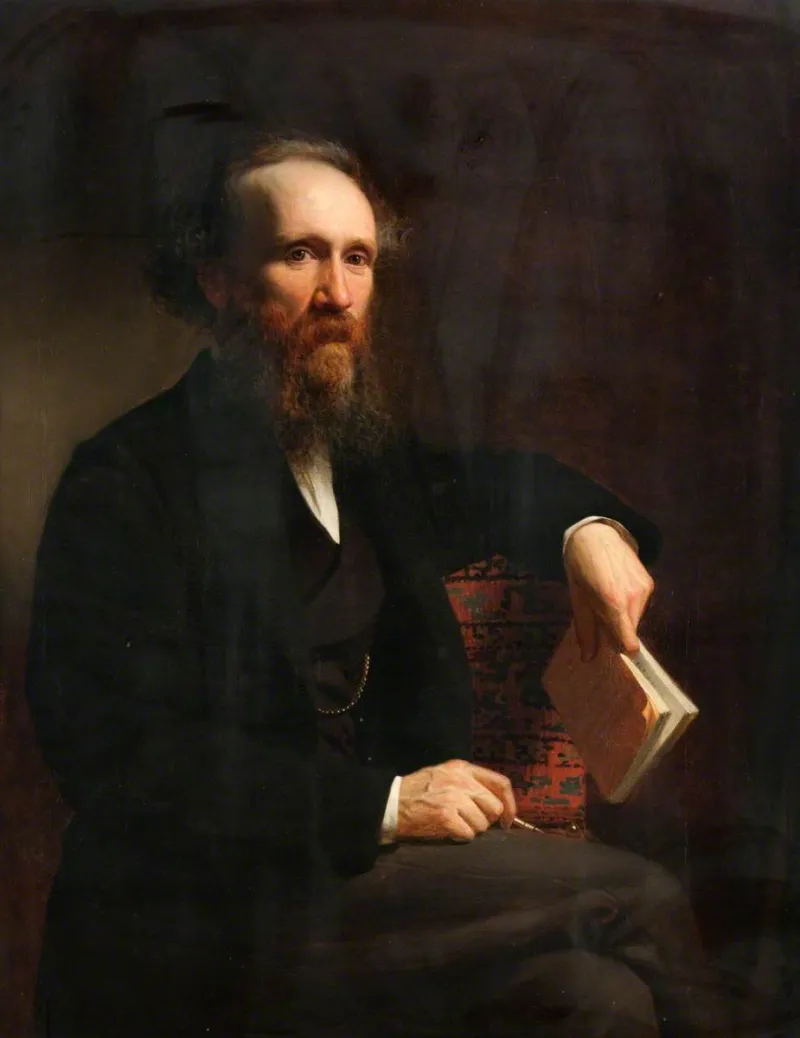
Photo: Norman Macbeth, Public domain, via Wikimedia Commons
The Boy in the Front Pew
Every Sunday of his childhood, he sat in the front pew of his father's church in rural Mississippi, watching the congregation pour in from the surrounding counties. Farmers. Laborers. Women who worked double shifts and still found something to put in the collection plate. He knew most of them by name. He knew which ones were sick. He knew which ones couldn't afford to do anything about it.
His father was a gifted preacher — the kind who could hold a room of three hundred people in something close to suspended animation for forty-five minutes at a stretch. The expectation was clear and unspoken and enormous: the son would become the father. The pulpit would pass like a torch.
For a long time, he tried to want that. He genuinely tried.
A Faith That Couldn't Hold the Weight
He went to seminary at twenty-two, the same year a woman in his father's congregation died of a treatable infection because the nearest hospital was forty miles away and she had no car and no insurance and no one who could take time off work to drive her. He attended the funeral. He listened to his father preach comfort and resurrection. He sat with the family afterward and nodded at things he no longer entirely believed.
The doubt didn't arrive like a thunderclap. It came in slowly, the way water finds its way into old foundations — patient, persistent, and eventually structural. He began asking questions in his theology classes that his professors found uncomfortable. Not hostile questions, exactly, but the kind that kept circling back to a problem he couldn't theology his way around: people were suffering from things that were preventable, and faith alone wasn't preventing them.
He left the seminary at twenty-four. His father didn't speak to him for two years.
The Long Way Into Medicine
He was older than most of his pre-med classmates when he enrolled at a state university in Tennessee, working nights at a hotel front desk to pay for classes that his former seminary scholarship no longer covered. His academic record from seminary was uneven — strong in philosophy and ethics, weak in the sciences he'd never prioritized. He had to fight for every grade in organic chemistry.
But something strange happened in those early science classes. The precision of it — the way biology followed rules, the way a body's systems communicated in a language that could be learned and spoken — didn't feel like the opposite of what he'd grown up believing. It felt like a different vocabulary for the same underlying awe. He wasn't abandoning reverence. He was relocating it.
He got into medical school on his second application. He graduated in the middle of his class. Nothing about his early medical career suggested the upheaval he was quietly planning.
The System He Couldn't Stop Thinking About
His residency in internal medicine took him back to communities that looked a lot like the one he'd grown up in — rural, underserved, demographically invisible to the institutions that controlled healthcare policy and funding. He saw the same patterns his father's congregation had lived with for generations: delayed diagnoses, preventable hospitalizations, chronic conditions managed badly because the infrastructure for managing them well simply didn't exist in poor, rural America.
Most of his colleagues saw this as a tragedy. He saw it as a design problem.
That distinction matters. Tragedies get mourned. Design problems get fixed.
He began building what would become his most significant contribution: a community health model that embedded preventive care directly into the social structures that rural populations already trusted. Churches. Schools. Local businesses. Barbershops. Rather than expecting underserved communities to navigate a healthcare system that had never been designed with them in mind, he brought the system to the community — and redesigned it around the community's actual patterns of life.
The approach wasn't original in every detail. Community health workers had existed for decades. What was original was the scale of his ambition and the specificity of his methodology, which drew heavily on his training in institutional trust — the same dynamics he'd studied in seminary, now applied to clinics instead of congregations.
The Establishment Pushes Back
Medical institutions are not naturally hospitable to disruption, particularly disruption that implies they've been doing something wrong. His model challenged the fee-for-service assumptions that structured most of American healthcare finance. It required hospitals and insurance systems to think in terms of population health rather than individual patient encounters. It asked powerful institutions to cede some control to community organizations that those institutions didn't fully understand or trust.
The pushback was significant and sometimes personal. He was dismissed in certain circles as an idealist with a messiah complex — which struck him as ironic, given what he'd walked away from. He was denied grants. He was excluded from conferences. He was the subject of at least one published critique that questioned whether his model was medicine at all, or merely social work dressed up in clinical language.
He responded the way he'd learned to respond to institutional resistance: by accumulating evidence until the resistance became untenable. His pilot programs produced outcomes data that was difficult to argue with. Readmission rates dropped. Emergency department utilization fell. Chronic disease management improved measurably in communities where his model operated.
What the Pulpit Left Behind
He will tell you, if you ask him directly, that he's not sure he ever fully left the faith he grew up in. What he left was the institution. What he left was the expectation that the institution was the same thing as the purpose it claimed to serve.
That distinction — between an institution and its stated mission — turns out to be useful in medicine too. Hospitals are not the same thing as health. Insurance is not the same thing as care. The map is not the territory. His father taught him that, in a different language, from a different pulpit, in a different Mississippi church.
His relationship with his father eventually healed. The two men spent the last years of his father's life in a conversation that both of them described as the most honest they'd ever had. His father never quite understood the healthcare work. But he understood the impulse behind it — the refusal to let people suffer from things that didn't have to cause suffering.
That, the old preacher acknowledged, sounded familiar.
Some rebellions, it turns out, are just a longer path to the same destination. The son left the church to save lives. The father had spent his whole life trying to do the same thing. They were always, in the ways that mattered most, speaking the same language.