Bars, Bolts, and Breakthroughs: The Inventions Born Inside Prison Walls
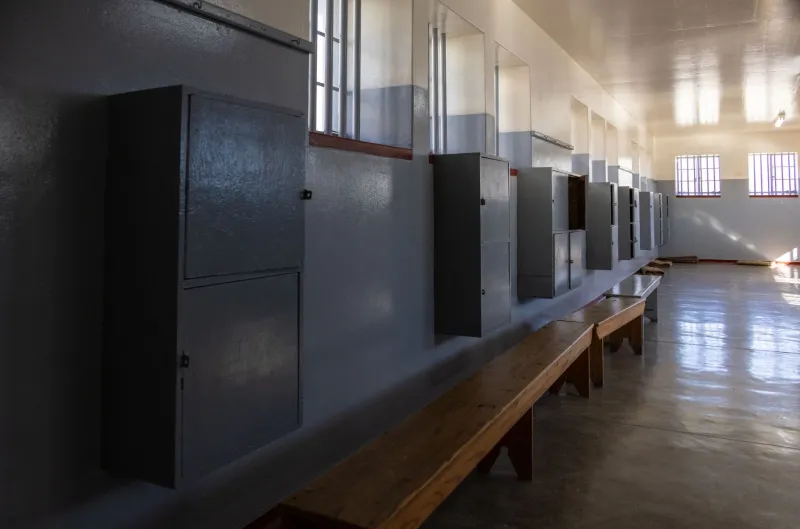
A cell is, by design, an exercise in subtraction. Take away movement. Take away choice. Take away the ordinary texture of a life lived on your own terms. The architects of incarceration understood that constraint was the point — that a person hemmed in by walls and schedules and surveillance would eventually stop reaching for anything beyond them.
They were wrong about some people.
Across American history and beyond, a handful of incarcerated individuals have responded to total constraint with something that looks, from the outside, almost like defiance: they invented things. They wrote things. They solved problems that had stumped people with laboratories and libraries and every advantage the free world could offer. What follows are five of those stories.
1. Garrett Morgan and the Lesson of Limitation
Garrett Morgan didn't invent the gas mask in prison, but his story begins in conditions that weren't far removed from it. Born to formerly enslaved parents in Kentucky in 1877, Morgan had no formal education beyond elementary school and spent his early adulthood doing whatever work he could find. He taught himself mechanics by taking apart and reassembling the machines he was paid to operate.
In 1916, when an explosion trapped workers deep inside a tunnel beneath Lake Erie in Cleveland, it was Morgan's self-invented breathing device — a canvas hood connected to an air tube — that rescue workers used to pull survivors from the smoke-filled darkness. Morgan had developed the device by working in the margins of other people's industries, in the spaces where formally trained engineers hadn't thought to look. He later invented an early version of the traffic signal, selling the patent to General Electric.
Morgan's constraint wasn't a cell. It was a society that had decided, before he was born, what he was allowed to become. He invented around it anyway.
2. Chester Gillette's Shadow and the Men Who Learned From His Story
The history of invention inside actual prison walls is harder to document than you might expect — partly because the legal ownership of incarcerated people's intellectual labor has historically been murky, and partly because the system was rarely interested in celebrating what happened inside it.
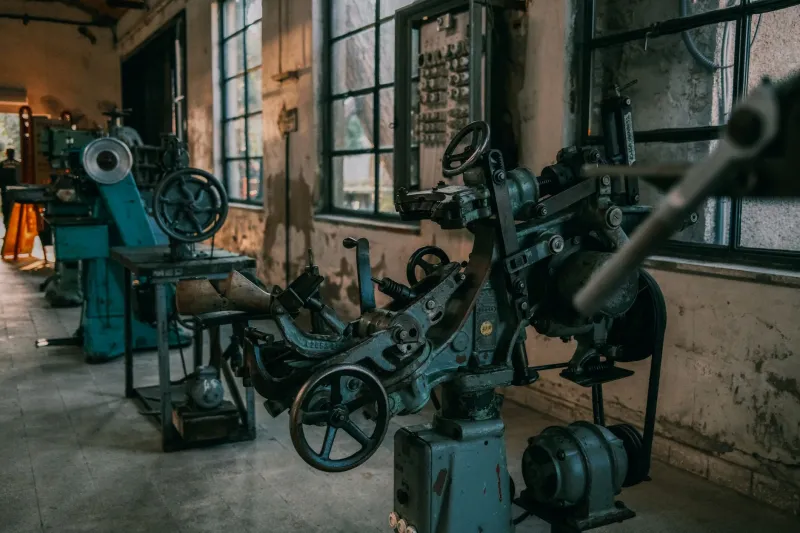
But the record exists. In the late 19th and early 20th centuries, American prisons were, in many cases, functioning industrial operations. Men assigned to machine shops and metalworking facilities developed genuine expertise. Some of them filed patents. Some of those patents were assigned to the prisons themselves. Some found their way into the broader economy in ways that were never fully traced back to their origins.
The more interesting stories, though, are the ones where incarceration produced not a product but a perspective — a way of seeing a problem that freedom, with all its noise and distraction, had somehow obscured.
3. Malcolm Little and the Invention of a Voice
In 1946, a 21-year-old man named Malcolm Little entered Charlestown State Prison in Massachusetts on a burglary conviction. He left, years later, as Malcolm X — one of the most electrifying and consequential voices in American political history. The transformation happened, in large part, through a self-directed education so rigorous and so deliberate that it amounted to a second invention of himself.
Malcolm later described copying the entire dictionary by hand in his prison cell, word by word, page by page — not as a punishment but as a chosen method of building a vocabulary he felt he'd been denied. He read voraciously, argued philosophy with fellow inmates, and developed the rhetorical precision that would later fill auditoriums and reshape the conversation around race and power in America.
What he invented in that cell wasn't a device or a mechanism. It was a worldview — a coherent, rigorously constructed framework for understanding history and injustice that he then turned into one of the most powerful public arguments of the 20th century. The prison had been designed to silence him. He used it as a library.
4. O. Henry and the Stories That Came From Shame
William Sydney Porter arrived at the Ohio Penitentiary in 1898 under circumstances that mixed genuine wrongdoing with genuinely bad luck. Convicted of embezzlement from a Texas bank — a case whose details have been disputed by historians ever since — he was a broken man by most measures: his wife was dying, his reputation was destroyed, and he was staring down a five-year sentence with no obvious future on the other side of it.
He started writing short stories in prison. He published them under the pen name O. Henry, a name chosen partly to protect whatever remained of his identity. By the time he was released in 1901, he had developed the narrative voice — warm, ironic, deeply sympathetic to ordinary people navigating impossible situations — that would make him one of the most beloved American short story writers of his era.
O. Henry's signature twist endings weren't just a stylistic trick. They were the work of a man who understood, from lived experience, that life had a way of turning in directions nobody saw coming. He'd been to the bottom of one of those turns. He wrote from that place, and readers felt it in every line.
5. The Patent Question Nobody Wanted to Answer
In recent decades, the question of what incarcerated people are allowed to do with their own ideas has become a genuine legal battleground. Several states have laws that assign the intellectual property of incarcerated inventors to the prison system or to private prison companies. Advocates have argued, with increasing urgency, that this amounts to a continuation of the same logic that once made enslaved people's labor legally invisible.
The argument matters because people are still inventing inside prison walls. They're designing better wheelchair components, writing code, developing solutions to problems in materials science and logistics. In some cases, they're doing it with access to almost nothing — no computers, no proper tools, no mentorship, no way to file a patent without outside legal help.
The constraint hasn't changed. What's changed is that more people are paying attention to what gets built inside it.
What the Walls Can't Contain
There's no romance to incarceration. The stories here aren't arguments for suffering as a prerequisite for creativity — they're arguments against the assumption that the most resourced, most credentialed, most advantaged people are necessarily the ones who move the world forward.
Sometimes the most radical thinking happens in the places where conventional thinking has been stripped away by force. Sometimes the person with nothing left to lose is also the person with nothing left to protect — including the comfortable assumptions that keep everyone else from seeing the problem clearly.
The walls were supposed to be the end of the story. For these five, they were closer to the beginning.