Nobody Wanted Them. Then They Won Everything: The QBs the NFL Almost Threw Away
The League Almost Got It Wrong
Every spring, NFL franchises spend tens of millions of dollars, thousands of man-hours, and enormous organizational energy trying to figure out who the next great quarterback is going to be. They run prospects through every conceivable test. They measure hand size. They time forty-yard dashes. They hire former coaches to grill kids in hotel rooms for twenty minutes and then declare them franchise cornerstones or busts.
And then, quietly, some of the greatest quarterbacks in NFL history get overlooked entirely — cut before training camp ends, passed over in the draft, or signed for the league minimum just to have a third arm in practice. The stories of what happened next are some of the most satisfying in American sports.
Kurt Warner: From Grocery Bagger to Super Bowl MVP
Let's start with the most jaw-dropping. Kurt Warner went undrafted in 1994, got cut by the Green Bay Packers, and spent the following years bagging groceries at an Iowa supermarket for $5.50 an hour. He played in the Arena Football League — a league most NFL scouts didn't even bother watching — and kept developing.
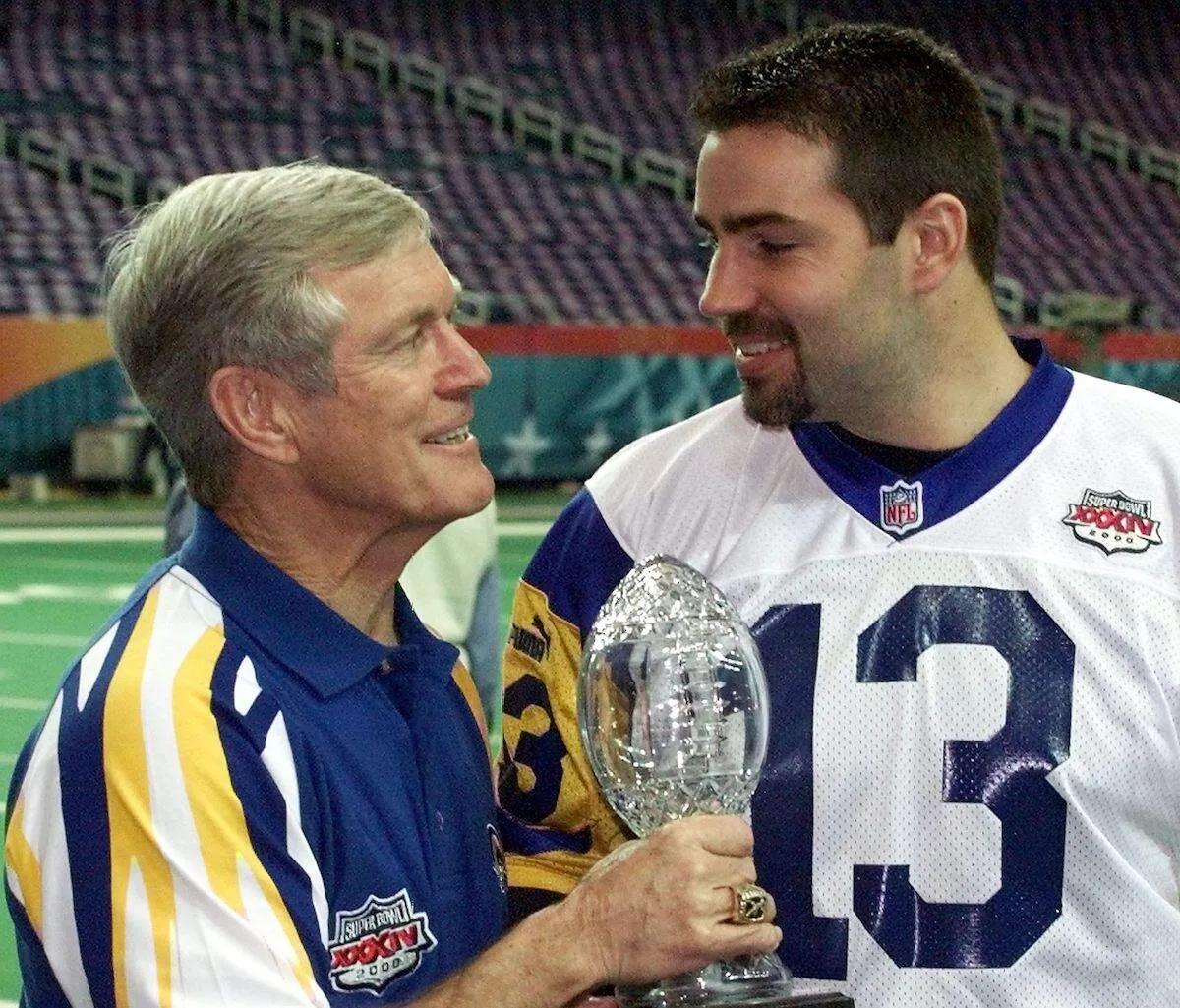 Photo: Kurt Warner, via www.sportscasting.com
When he finally got his shot with the St. Louis Rams in 1999, the football world barely noticed. The Rams were thin at quarterback, and Warner was the emergency option. What followed was one of the most staggering single-season performances in NFL history. Warner threw for 4,353 yards, 41 touchdowns, and won both the regular season MVP and the Super Bowl MVP in the same year. The Rams won the championship. Warner became a legend.
He went on to throw for over 32,000 career yards, earn two NFL MVP awards, and get inducted into the Pro Football Hall of Fame. The Packers, who cut him before he ever threw a regular-season pass, watched from the sidelines.
Tony Romo: The Undrafted Kid Who Owned Dallas
Tony Romo wasn't just undrafted — he was undrafted and then barely noticed even after signing with the Dallas Cowboys as a free agent in 2003. He spent three years as a backup, holding for field goals and learning the playbook while Drew Bledsoe took the snaps.
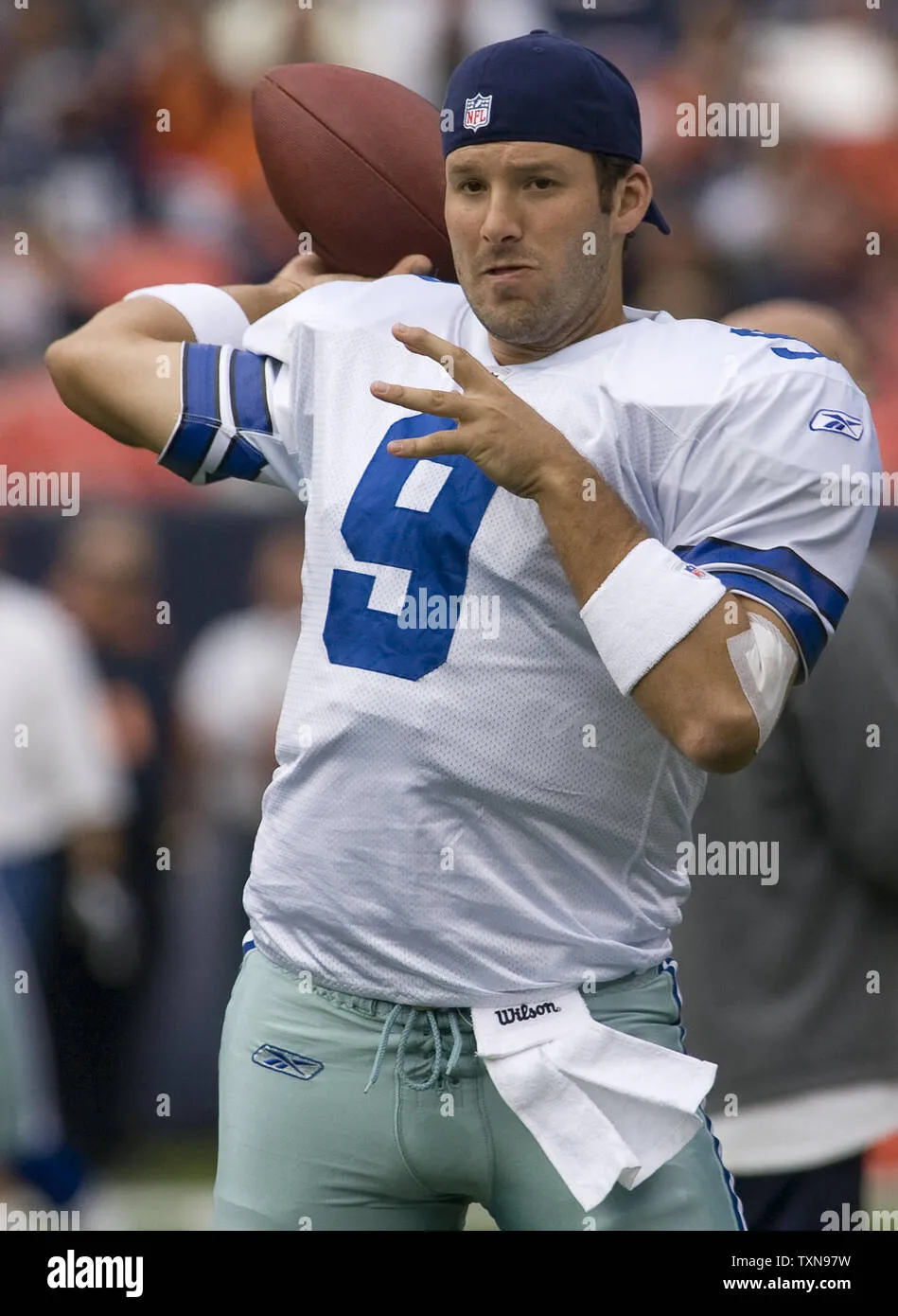 Photo: Tony Romo, via c8.alamy.com
When Romo finally got his chance midway through the 2006 season, he turned the Cowboys into a legitimate contender almost overnight. He made four Pro Bowls, threw for over 34,000 career yards, and became one of the most statistically efficient passers of his era. He never won a Super Bowl — a fact his critics never let him forget — but for a player the entire NFL passed on coming out of college, what he built in Dallas was extraordinary.
Romo's story carries an extra layer of grit: he played through injuries that would have ended most careers, kept competing into his mid-thirties, and then transitioned into one of the most celebrated broadcast careers in football history. The league that didn't want him eventually couldn't stop talking about him.
Warren Moon: Rejected by the Draft, Embraced by History
Warren Moon's path was longer and harder than most, carrying a weight that went beyond football. Despite leading the University of Washington to a Rose Bowl victory, Moon went undrafted in 1978. The NFL, at that time, had a largely unspoken but very real resistance to Black quarterbacks at the professional level. Teams didn't say it plainly, but the offers — to switch positions, to play elsewhere — made the message clear.
Moon refused. He went to Canada, played six seasons in the CFL, won five Grey Cup championships, and was so dominant that the NFL finally couldn't ignore him. He signed with the Houston Oilers in 1984 and became one of the most prolific passers the game had ever seen. By the time he retired, he had thrown for over 49,000 yards across both leagues — a number that still stands among the all-time greats.
He was inducted into the Pro Football Hall of Fame in 2006. The league that decided he wasn't worth a draft pick eventually gave him its highest honor.
Jake Plummer: The Snake Who Bit Back
Jake Plummer was drafted — barely, in the seventh round in 1997 — and then spent years being underestimated anyway. He scraped his way into a starting role with the Arizona Cardinals, a franchise so dysfunctional in that era that surviving there was its own kind of accomplishment, and then reinvented himself with the Denver Broncos.
In Denver, Plummer became genuinely dangerous. He led the Broncos to back-to-back AFC West titles, threw for over 27,000 career yards, and in the 2003 season posted a passer rating and touchdown-to-interception ratio that ranked among the league's best. He was never a superstar in the conventional sense, but he was the kind of quarterback who won games in ways that didn't always show up on the stat sheet — scrambling, improvising, refusing to let a game die.
The NFL's seventh round is supposed to produce depth players. Plummer gave Denver some of the best years the franchise had seen in a decade.
Shaun Hill: The Career Backup Who Kept Proving Everyone Wrong
Shaun Hill's story is less about one explosive moment and more about sustained, stubborn competence in the face of complete institutional indifference. He went undrafted in 2002, bounced through several teams, and spent years as a practice squad body — the kind of player who exists to help the starters look better in practice and then goes home.
When Hill finally started games for the Detroit Lions in 2008, he was 28 years old and most people in football had already written him off as a career backup. He threw for over 2,000 yards that season with a Lions team that was historically bad — they finished 0-16 — and he did it well enough that multiple franchises subsequently fought over his services as a starter or high-level backup.
Hill played until he was 36, long past the point where the NFL's system had decided he had no value. He kept finding ways to be useful, to be reliable, to be better than the options teams had paid real money for. In a league that discards players like worn-out equipment, that kind of longevity is its own form of greatness.
What the Waiver Wire Teaches Us
The NFL draft is a machine built on certainty — on the idea that with enough data, enough film study, enough combine measurements, you can identify greatness before it happens. These five quarterbacks are proof that the machine is wrong at least as often as it's right.
Greatness in football, like greatness in most things, doesn't always announce itself at twenty-two. Sometimes it shows up at a grocery store checkout lane in Iowa. Sometimes it takes a detour through Canada. Sometimes it just needs someone to finally hand over the ball and get out of the way.
The men who almost got thrown away had one thing the draft couldn't measure: they never stopped believing the league had made a mistake. Turns out, they were right.