The Flaw That Became the Voice: America's Love Affair With Imperfect Icons
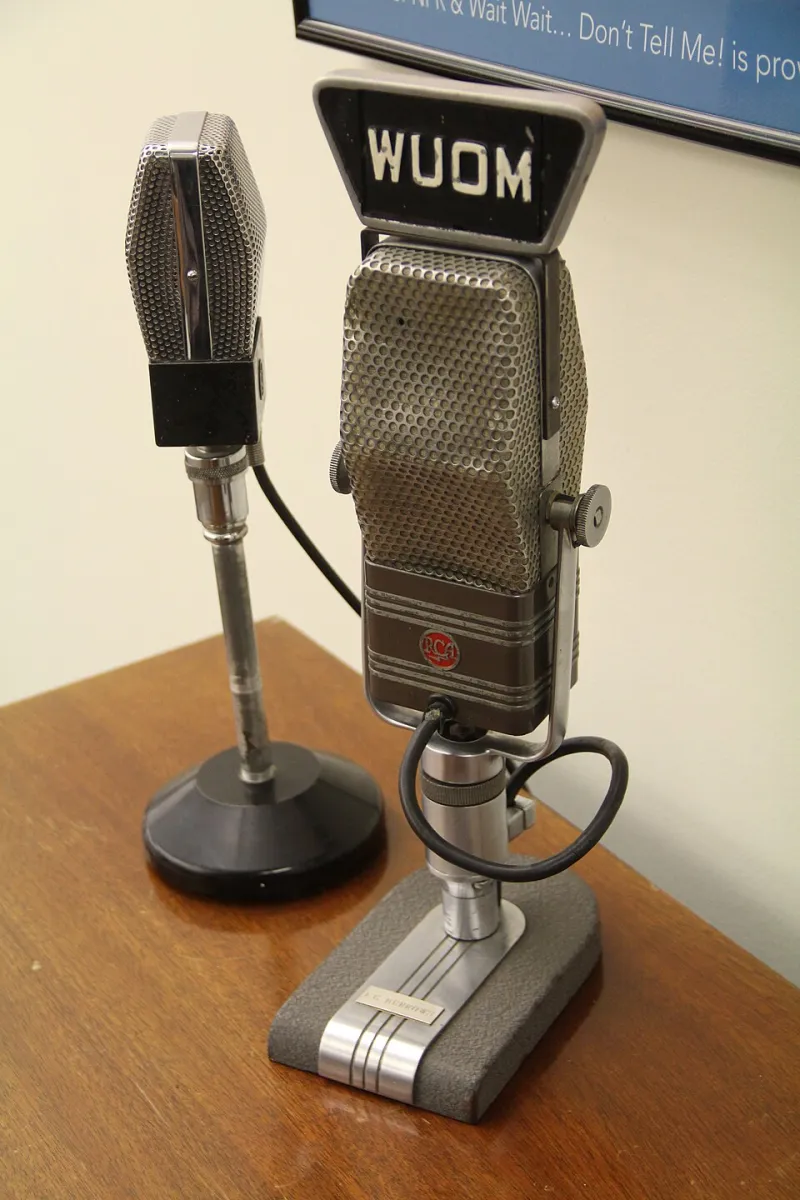
Photo: Fourandsixty, CC BY-SA 4.0, via Wikimedia Commons
Turn on the radio at any point in the last century and you'll hear the same standard: the voice, warm and seamless, gliding through the static. Training can manufacture that voice. Thousands of broadcasters have it.
And yet — the voices America actually remembers, the ones stitched into our collective memory, tend to be the damaged ones. The stammer. The rasp. The drawl that a speech coach would have sanded off in a week. We didn't just tolerate the flaw. We fell for it.
The Stutter That Refused to Be Silenced
Start with the man who defined what a broadcaster could be: Winston Churchill's struggle is well documented, but the American stage had its own giants. Consider the countless radio pioneers who came to the microphone with speech impediments so severe they'd been told to find another line of work.
The most striking modern example is Joe Biden, whose childhood stutter was so punishing that classmates mocked him and teachers wrote him off. He practiced reading poetry aloud in his bedroom mirror, reciting Yeats and Emerson until the words stopped snagging. Did the stutter vanish entirely? No. It surfaced at high-stakes moments for the rest of his life. But the discipline it forged — the habit of pushing through the block, of refusing to hand over the sentence — became the very quality his supporters pointed to when they called him resilient.
The flaw didn't disqualify him from the highest office in the country. In a strange way, it vouched for him.
When the Voice Breaks, the Audience Leans In
There's a reason the most imitated voice in American music belongs to a man who could barely sing cleanly. Johnny Cash's baritone was rough, untrained, and occasionally cracked under its own weight — and nobody who heard it ever forgot it. Compare him to the technically superior crooners of his era. How many of them does America still hum?
Or take Tom Waits, a voice so wrecked it sounds like gravel in a blender. Record executives reportedly hated it. Audiences treated it as a national treasure. The imperfection wasn't a bug in the performance — it was the performance. You couldn't fake it, which meant you couldn't dismiss it.
Same story on screen. Sylvester Stallone's slurred speech and drooping expression — the result of forceps complications at birth — got him laughed out of auditions for years. Then he wrote "Rocky" and insisted on playing the lead. Hollywood wanted a handsome nobody. It got a face nobody else had, and that face became one of the most profitable in movie history.
The Science of Why Flawed Voices Work
There's actual research behind this. Studies on vocal roughness suggest that slight imperfections — a crack, a tremor, a hesitation — trigger what psychologists call the "pratfall effect": competent people who show a flaw become more likable, not less. Perfection creates distance. Vulnerability creates a bridge.
Broadcasters learned this empirically. The smoothest announcers sound like institutions. The slightly broken ones sound like people. And in moments of crisis — a national tragedy, a war, an election night that won't end — Americans reach for the voice that sounds like it has been through something. Because it has. You can hear it.
The Age of Polish Is Losing
Here's the modern twist: we live in the most polished era of communication in human history. Autotune, teleprompters, media training, AI-assisted everything. And what's happening? The polished voices are blurring together into wallpaper.
Meanwhile, the people breaking through — podcasters with regional accents, singers with imperfect pitch, leaders who stumble mid-sentence and own it — are winning precisely because they can't be manufactured. In a marketplace of flawless delivery, the flaw is the only thing left that's scarce.
Stallone's face. Cash's rasp. A stutter pushed through by sheer will. Each one a reminder that the thing you'd most like to fix about yourself might be the only thing nobody else can copy.
The voice coaches were wrong. America was never listening for perfect. We were listening for real — and real always sounds a little broken.