When the Music Stopped
At twelve years old, Evelyn Glennie sat in a specialist's office in Scotland, receiving news that would have crushed most musical dreams: her hearing was deteriorating rapidly, and within a few years, she would be profoundly deaf. The doctor was matter-of-fact about her future. "A career in music," he said, "is simply not possible."
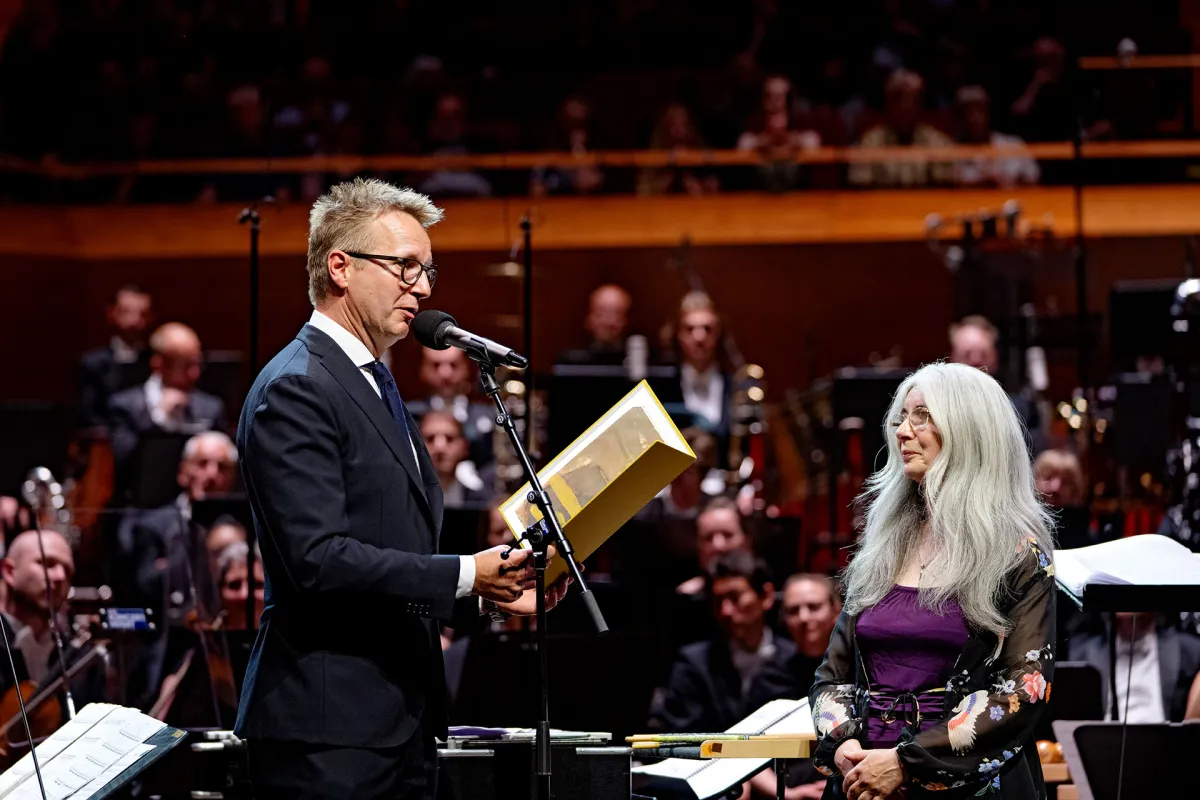 Photo: Evelyn Glennie, via www.evelyn.co.uk
Glennie had already fallen in love with percussion. She'd started playing piano at eight, but it was the drums that called to her—the way rhythm seemed to pulse through her entire body, not just her ears. Now, medical professionals were telling her that this connection she felt so deeply was about to be severed forever.
But Glennie had already discovered something that her doctors didn't understand: music had never been just about hearing.
Feeling the Frequency
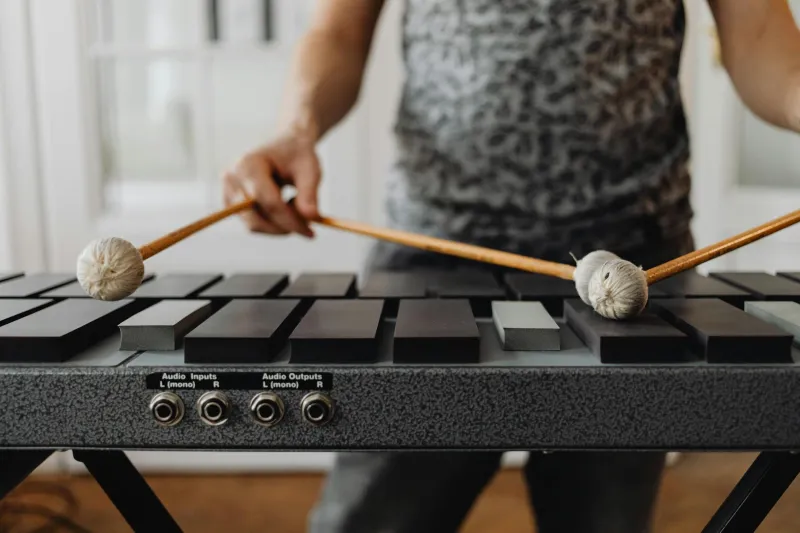
As her hearing faded, Glennie began developing what would become her revolutionary approach to percussion. She learned to feel vibrations through her feet, her hands, her entire body. She discovered that different instruments created distinct physical sensations—the timpani sent waves through the floor, cymbals created a shimmer she could feel in the air around her, and snare drums produced a sharp sensation against her skin.
What started as adaptation became innovation. Glennie wasn't just compensating for her hearing loss; she was accessing dimensions of music that hearing musicians often missed entirely. She could feel the subtle differences between mallets, sense the acoustic properties of different performance spaces, and detect rhythmic nuances that escaped traditional listening.
When she applied to the Royal Academy of Music in London, the admissions committee was skeptical. How could a deaf student succeed in an institution built around auditory precision? Glennie's audition answered that question definitively. Her technique wasn't just competent—it was extraordinary.
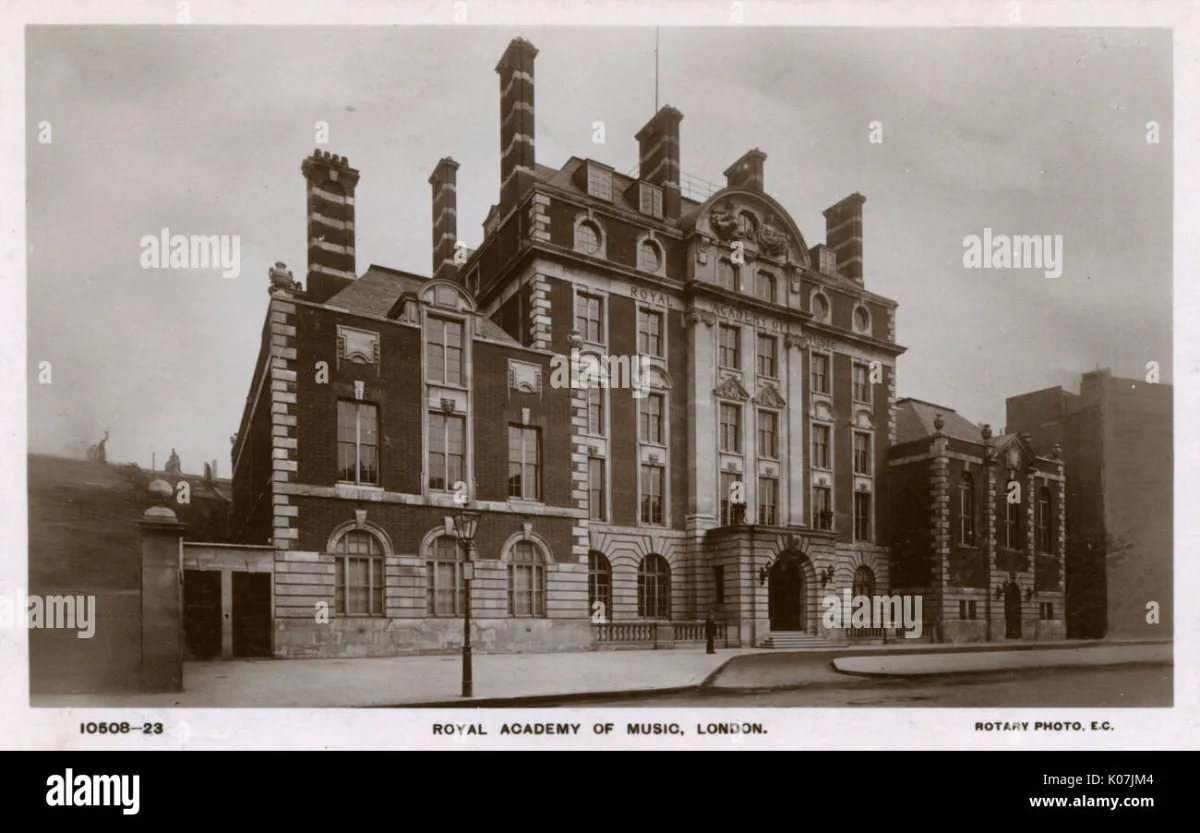 Photo: Royal Academy of Music in London, via c8.alamy.com
The Teacher Who Redefined Teaching
After establishing herself as one of the world's premier percussionists, Glennie began teaching, and this is where her true impact on American music education emerged. She didn't teach students to play percussion the way she'd been taught—she taught them to experience music the way she'd learned to experience it.
In masterclasses across American conservatories, Glennie would have students remove their shoes and feel vibrations through the floor. She'd teach them to sense rhythm through their hands placed on instruments, to understand dynamics through physical sensation rather than just volume. Her students—both hearing and deaf—began developing a more complete relationship with music.
"Listen with your whole body," became her signature instruction. It sounds like a metaphor, but Glennie meant it literally. She was teaching students to access the physical reality of sound waves, to understand that music is as much a tactile experience as an auditory one.
Breaking Down the Barriers
Glennie's influence on American music education went far beyond technique. She fundamentally challenged assumptions about who could participate in musical performance. Her success opened doors for deaf and hard-of-hearing students who had been told, as she once was, that serious musical study wasn't for them.
But her impact was equally profound on hearing students and teachers. She showed them that their understanding of music had been unnecessarily limited. By teaching people to feel rhythm, not just hear it, she was making music more accessible to students with different learning styles, physical abilities, and cultural backgrounds.
American music programs began incorporating her methods. Students who had struggled with traditional rhythm instruction suddenly found success when they learned to feel the beat through their bodies. Teachers discovered that Glennie's approach helped all students develop better timing, more nuanced dynamics, and deeper musical understanding.
The Revolution in Perception
What makes Glennie's story so remarkable isn't just that she overcame deafness to become a world-class musician—it's that she used her deafness to revolutionize music itself. The limitation that should have ended her career became the source of her greatest innovation.
She proved that the traditional model of musical education—built almost entirely around auditory learning—was incomplete. Her whole-body approach to music didn't just help deaf students; it enhanced musical education for everyone.
Beyond Sound
Today, Glennie's influence can be seen in music programs across America. Teachers trained in her methods work with students of all abilities, using tactile learning to deepen musical understanding. Her approach has been particularly transformative in special education, where students who might have been excluded from musical participation now find pathways to expression and achievement.
The girl who was told she couldn't have a career in music didn't just prove the experts wrong—she showed them they'd been asking the wrong questions entirely. Music isn't just about what you can hear; it's about what you can feel, sense, and experience with your entire being.
Evelyn Glennie's story reminds us that sometimes our greatest limitations become our most powerful innovations. She didn't just adapt to deafness; she transformed it into a new way of understanding the very nature of music itself.