When Needlework Was Nation-Building
History has a peculiar blindness when it comes to women's work. We remember the generals who planned battles, but forget the seamstresses who sewed the uniforms. We celebrate the engineers who designed spacecraft, but overlook the women who hand-stitched every life-supporting seam. These five remarkable women prove that some of America's most pivotal moments were literally sewn together by hands that history barely bothered to record.
Betsy Ross: The Myth That Became More Powerful Than the Truth
The story everyone knows about Betsy Ross is probably false. The tale of George Washington personally commissioning her to sew the first American flag was invented by her grandson fifty years after the fact, with zero historical evidence to support it. But here's what makes Betsy Ross's real story far more interesting than the myth: she was a successful businesswoman running an upholstery shop in revolutionary Philadelphia, supporting herself after being widowed at twenty-four.
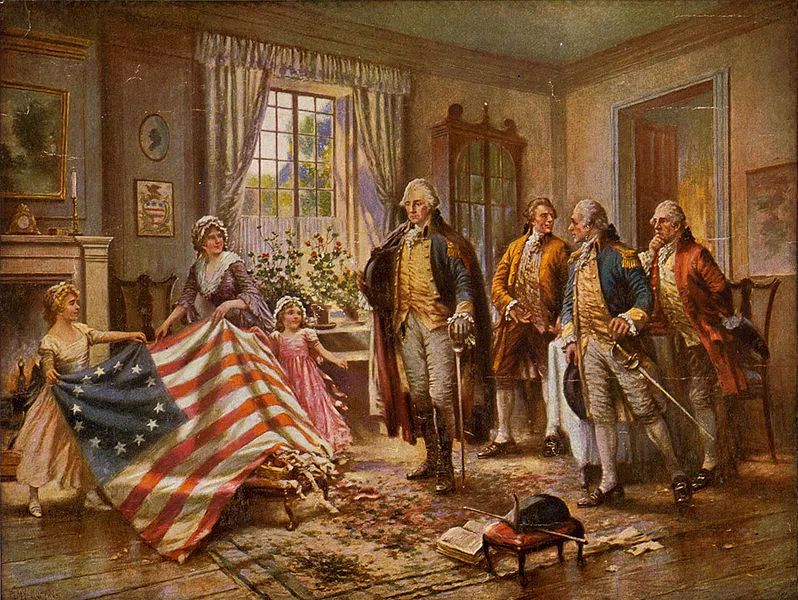 Photo: Betsy Ross, via totallyhistory.com
Ross belonged to a network of Philadelphia seamstresses who kept the Continental Army from falling apart — literally. While Washington's soldiers were famously freezing at Valley Forge, women like Ross were working around the clock to produce uniforms, blankets, and tent canvas that could mean the difference between survival and death.
The irony is perfect: Americans created a fictional story about Ross sewing a flag while completely ignoring her real contribution to the war effort. She and her fellow seamstresses were running what amounted to the Continental Army's textile industrial base, coordinating supply chains and meeting impossible deadlines with tools that hadn't changed since medieval times. The myth made her famous, but the reality made her indispensable.
Mary Ann Bickerdyke: The Battlefield Seamstress Who Saved More Lives Than Most Generals
When Mary Ann Bickerdyke arrived at the Battle of Fort Donelson in 1862, she found Union soldiers dying not from Confederate bullets, but from infections caused by dirty bandages and unsanitary conditions. A widow from Illinois with no formal medical training, Bickerdyke had one skill that proved more valuable than any medical degree: she could organize women to sew faster and more efficiently than any factory.
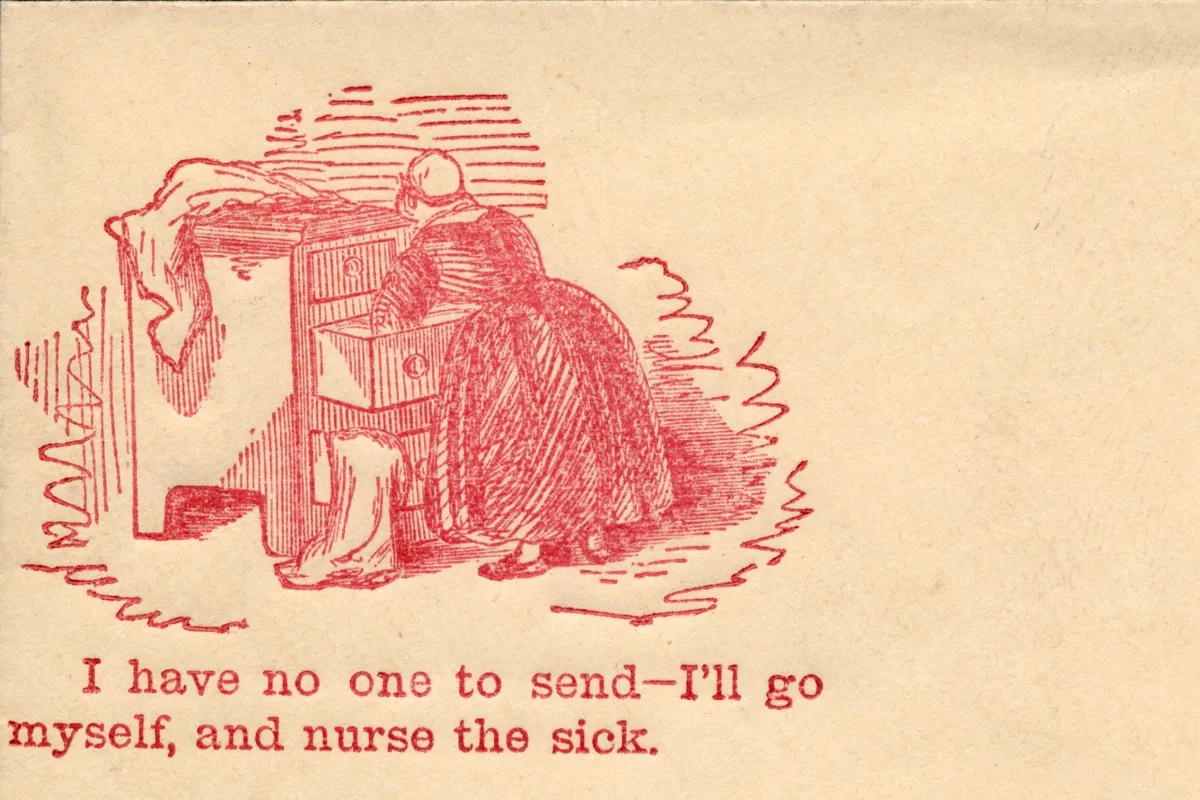 Photo: Mary Ann Bickerdyke, via www.thoughtco.com
Bickerdyke created an army of volunteer seamstresses who produced clean bandages, surgical supplies, and hospital gowns at a pace that military quartermasters couldn't match. But her real innovation was quality control — she developed standards for sterile sewing that reduced infection rates dramatically. Soldiers started calling her "Mother Bickerdyke," but a more accurate title might have been "Chief Operating Officer of Battlefield Medicine."
She followed Sherman's army through Georgia, setting up field hospitals and training local women to maintain her sewing standards. By the war's end, Bickerdyke's network had produced millions of pieces of medical supplies and probably saved more lives than any single general's tactical decisions. Yet most Civil War histories mention her in passing, if at all.
The Hidden Figures of World War II: Black Seamstresses Who Sewed Victory
When America entered World War II, the military faced a manufacturing crisis: how do you produce millions of parachutes when your traditional textile workforce has been drafted? The answer came from an unexpected source: Black women in the South, many of whom had learned precision sewing in domestic service, were recruited to work in defense plants producing parachutes, flight suits, and other critical gear.
Women like Willie Mae Hardy in Alabama and Dorothy Height in Virginia became part of an invisible army of seamstresses whose work was literally a matter of life and death. A single mistake in parachute construction could kill a pilot, so these women developed quality standards that exceeded anything in civilian manufacturing. They worked under intense pressure, often in segregated facilities, knowing that their brothers and sons overseas depended on their precision.
The tragic irony is that while these women were sewing parachutes for white pilots who wouldn't have been allowed to eat in the same restaurant, they were also proving their technical capabilities to an industry that had previously excluded them. After the war, many parlayed their defense plant experience into careers in fashion and textile manufacturing, breaking barriers that had existed since Reconstruction.
Ellie Foraker: The Space Suit Seamstress Who Made the Moon Landing Possible
When NASA needed space suits for the Apollo program, they turned to an unlikely contractor: the International Latex Corporation, better known for making Playtex bras and girdles. The company's secret weapon was a team of seamstresses led by Eleanor "Ellie" Foraker, who had spent decades perfecting techniques for sewing flexible, form-fitting garments.
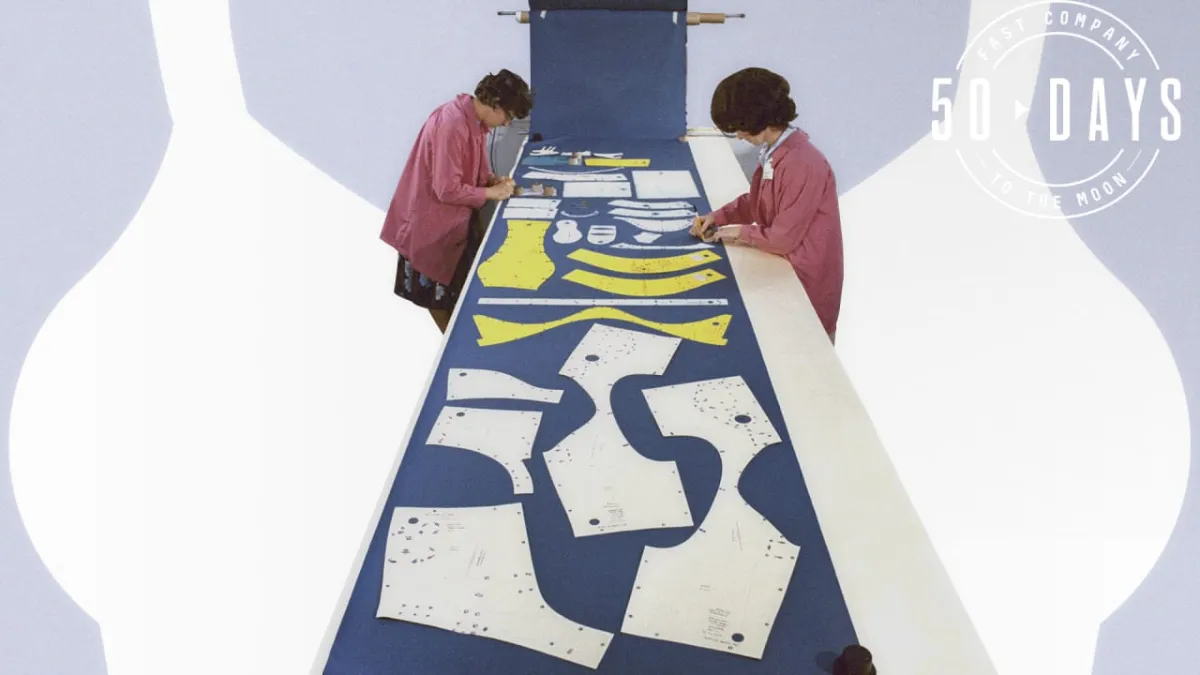 Photo: Eleanor Foraker, via images.fastcompany.net
Space suits presented challenges that no seamstress had ever faced: every seam had to be airtight, flexible enough to allow movement, and strong enough to withstand the vacuum of space. Foraker and her team developed entirely new sewing techniques, using multiple layers of specialized materials and testing every suit in vacuum chambers that simulated lunar conditions.
The Apollo 11 space suits were essentially custom-tailored clothing that happened to be capable of keeping humans alive in the most hostile environment imaginable. Neil Armstrong's first steps on the moon were possible because a team of seamstresses in Delaware had figured out how to sew a seam that could withstand the temperature extremes of space. Yet when NASA celebrates the Apollo program, the seamstresses who made it possible are rarely mentioned.
Rosa Parks: The Seamstress Who Tailored a Movement
Everyone knows Rosa Parks as the woman who refused to give up her bus seat, but fewer people know she was a skilled seamstress who had worked in department stores and taken in alterations to support her family. Her sewing skills weren't incidental to her activism — they were central to it.
Parks understood that the civil rights movement needed to look respectable to succeed, and she spent countless hours altering donated clothes so that protesters would present themselves well in newspaper photographs and television coverage. She organized sewing circles that produced clothing for families participating in the Montgomery Bus Boycott, ensuring that economic pressure wouldn't force people to abandon the cause.
More importantly, Parks's experience as a seamstress had taught her the power of precision and patience. Sewing requires the ability to envision a finished product while working through hundreds of small, repetitive steps — exactly the mindset that successful social movements require. The woman who sparked the Montgomery Bus Boycott had spent decades training for that moment, one careful stitch at a time.
The Thread That Connects Them All
These five women shared something beyond their sewing skills: they understood that the most important work often happens in spaces that powerful people don't think to document. While men debated policy in boardrooms and battlefields, these women were solving practical problems that determined whether those policies could actually work.
Their stories remind us that American history isn't just about the famous names in textbooks — it's about countless individuals whose skilled hands and innovative minds shaped the country in ways that were too fundamental to notice at the time. Sometimes the most revolutionary act is simply doing essential work so well that everyone else can focus on making history.
In the end, these seamstresses didn't just alter fabric — they altered the course of American history, one careful stitch at a time.