Locked Up, Cashing In: The Convict Who Turned a Prison Workshop Into Patent Gold
The Workshop at the End of the World
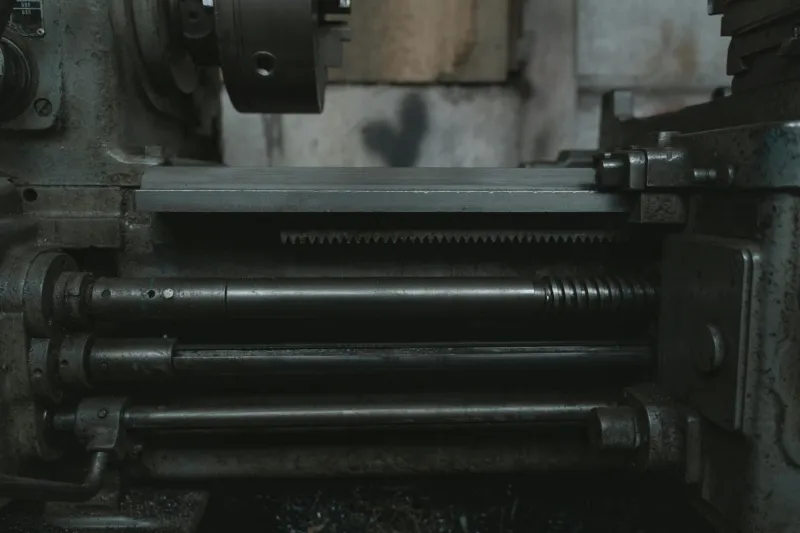
The vocational training room at Millfield Correctional Facility looked like mechanical purgatory. Rusted lathes from the 1960s sat alongside drill presses that required three men to operate safely. The fluorescent lights flickered constantly, and the concrete floor was stained with decades of oil and metal shavings.
This was where Marcus Williams spent eight hours a day, five days a week, learning skills the prison administration hoped would keep him employed after his release. What they didn't expect was that Marcus would use their broken-down equipment to engineer his way to fortune—all while serving a twelve-year sentence for armed robbery.
Marcus had arrived at Millfield in 2003 as angry and directionless as any twenty-four-year-old facing over a decade behind bars. The vocational program was supposed to teach him a trade. Instead, it taught him to see problems differently.
The Education of Necessity
The prison workshop operated under constraints that would have shut down any legitimate business. Tools broke constantly and replacement parts were impossible to get. Safety equipment was minimal. The men working there had to improvise solutions daily just to complete basic tasks.
For most inmates, these limitations were frustrating obstacles. For Marcus, they became a graduate-level education in creative problem-solving.
When the primary drill press broke down for the third time in a month, Marcus didn't just fix it—he redesigned the mounting system to prevent the same failure from recurring. When the ventilation system couldn't handle the dust from their projects, Marcus figured out how to redirect airflow using materials scavenged from other parts of the prison.
Each solution sparked another question: Why doesn't someone make this better? Why hasn't anyone thought of this before?
The Lightbulb Moment
Marcus's breakthrough came in his third year, while working on what should have been a simple project: building wooden storage boxes for the prison library. The workshop's table saw was so old and imprecise that getting clean, straight cuts was nearly impossible.
Frustrated after ruining his fifth piece of wood, Marcus spent his evening in his cell sketching modifications to the saw's guide system. He envisioned a adjustable fence mechanism that would allow for more precise cuts while accommodating warped lumber—exactly the kind of problem every small woodworking shop faced.
The next day, using scrap metal and improvised tools, Marcus built a prototype of his improved guide system. It worked perfectly.
That's when the idea hit him: this wasn't just a solution to their workshop's problems. This was a solution that could be worth something.
Patent Pending from Cell Block C
Marcus had never heard of provisional patents or intellectual property law, but he had access to something invaluable: the prison law library. He began spending his free time reading patent applications, studying the language and format, learning how ideas became protected property.
What he discovered was that the patent system was designed to reward exactly what he'd been doing: identifying problems and creating original solutions. The fact that he was incarcerated was irrelevant—the U.S. Patent Office didn't care where good ideas came from.
Working with a paralegal program volunteer, Marcus filed his first patent application in 2007: "Adjustable Precision Guide System for Circular Saws." The filing fee nearly exhausted his prison commissary account, but Marcus believed he was investing in his future.
Six months later, he received notification that his patent had been approved.
The Innovation Engine
Success bred ambition. Marcus began looking at every aspect of the prison workshop through the lens of potential improvement. The inadequate dust collection systems. The dangerous electrical connections. The improvised tool storage that wasted time and created hazards.
Each problem became a patent application.
By 2010, Marcus had filed seventeen different patents, covering everything from workshop safety equipment to modified hand tools. He'd taught himself technical drawing, materials science, and basic engineering principles—all from books in the prison library and through trial and error in the workshop.
Other inmates thought he was crazy, spending his commissary money on patent fees instead of snacks or phone calls. But Marcus understood something they didn't: he was building a business portfolio.
Licensing from Lockup
The breakthrough came when a small tool manufacturer in Ohio discovered Marcus's patents during their own product development research. His dust collection system design was exactly what they needed for a new line of compact workshop equipment.
The licensing negotiation was surreal: Marcus conducting business calls from the prison pay phone, discussing royalty rates and manufacturing specifications while guards monitored his conversations. But the contract was real—$50,000 upfront plus ongoing royalties for the right to manufacture his design.
SuddenlyMarcus wasn't just an inmate with ideas. He was an inventor with income.
The Millionaire Behind Bars
By 2012, three of Marcus's patents had been licensed by different manufacturers. His workshop safety innovations were being used in vocational schools across the country. His tool modifications were selling in hardware stores from coast to coast.
The irony wasn't lost on anyone: Marcus Williams, serving time for stealing $3,000 from a convenience store, had created intellectual property worth over a million dollars—all while locked up.
Prison officials were initially suspicious of Marcus's business activities. How could an inmate be earning legitimate income? But after investigation, they realized Marcus had done something remarkable: he'd turned his incarceration into an advanced degree in innovation.
The Philosophy of Constraint
Marcus's success attracted attention from business schools and innovation researchers. Here was proof of a counterintuitive principle: extreme limitations can spark extraordinary creativity.
In interviews conducted through the prison's media program, Marcus explained his philosophy: "When you can't buy your way out of a problem, you have to think your way out. When you don't have the right tools, you have to invent them. Prison didn't give me opportunities—it gave me constraints. And constraints force you to be creative."
Researchers studying innovation began citing Marcus's case as evidence that breakthrough thinking often emerges from resource scarcity, not abundance.
Freedom and Fortune
Marcus Williams was released from Millfield Correctional in 2015, after serving twelve years. He walked out with $1.3 million in patent licensing income waiting for him—more money than most people accumulate in a lifetime of traditional employment.
But Marcus's real achievement wasn't financial. He'd proven that innovation doesn't require ideal conditions—it requires an innovative mindset. He'd shown that some of America's most original thinking happens in its most restrictive places.
Today, Marcus runs a consulting firm that helps manufacturers solve production problems. He also speaks at business schools about constraint-based innovation. His message is simple: the biggest limitations often hide the biggest opportunities.
The workshop at Millfield Correctional still operates with the same broken-down equipment and impossible constraints. But now it carries a different meaning—not as a symbol of punishment, but as proof that human creativity can flourish anywhere.
Marcus Williams didn't just serve his time. He invested it. And in doing so, he transformed both his own future and our understanding of where great ideas come from.