The Courtroom That Sealed a Fate
The judge barely looked up when he delivered the sentence. Sixteen-year-old Marcus Williams had been in and out of the juvenile system since he was twelve, and everyone in that Los Angeles courtroom — the prosecutor, the public defender, even his own mother — seemed relieved that someone else would finally be responsible for him. The verdict was swift: guilty on three counts of armed robbery, sentenced to serve until his twenty-first birthday in California's youth correctional system.
 Photo: Los Angeles, via cdn.britannica.com
What nobody in that room could have predicted was that those concrete walls would become the crucible where one of America's most distinctive literary voices would be forged. Marcus Williams would spend the next five years learning that when you're stripped of everything — freedom, dignity, hope — the only thing left is the story you tell yourself about who you really are.
The Library That Changed Everything
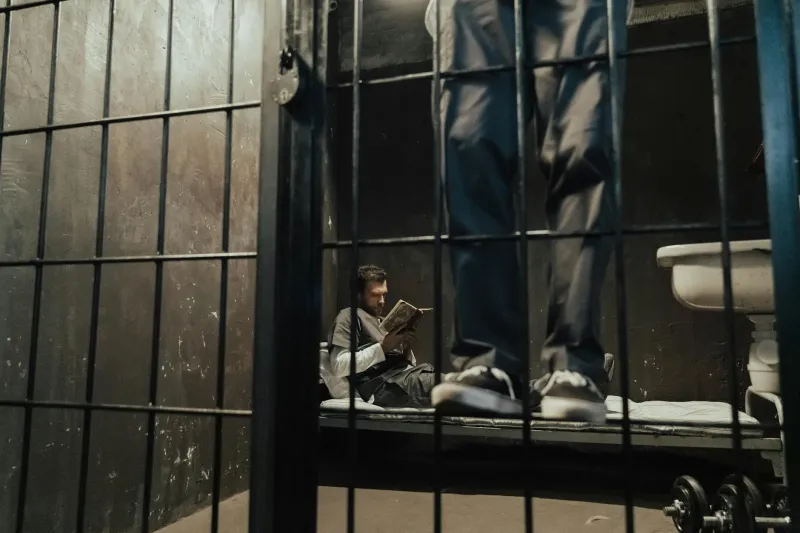
Marcus arrived at the California Youth Authority facility in Chino expecting the worst, and for the first six months, that's exactly what he got. The older inmates tested him daily, guards treated him like inventory, and the educational programs seemed designed more for crowd control than actual learning. He was angry, isolated, and rapidly developing the kind of institutional hardness that makes rehabilitation impossible.
 Photo: California Youth Authority, via images-na.ssl-images-amazon.com
Then he discovered the library.
It wasn't much — a converted classroom with maybe three thousand donated books, most of them decades old. But for a kid who had been kicked out of school in seventh grade and had never owned a book in his life, it might as well have been the Library of Congress. The librarian, a retired teacher named Mrs. Rodriguez, had one simple rule: if you could prove you'd read a book by writing a one-page summary, she'd let you check out another one.
Marcus started with comic books and moved to crime novels, devouring everything from Mickey Spillane to Elmore Leonard. But the book that changed his trajectory was "The Autobiography of Malcolm X." Here was someone who had also been written off by society, who had also spent time behind bars, and who had transformed himself through reading and writing into something nobody thought possible.
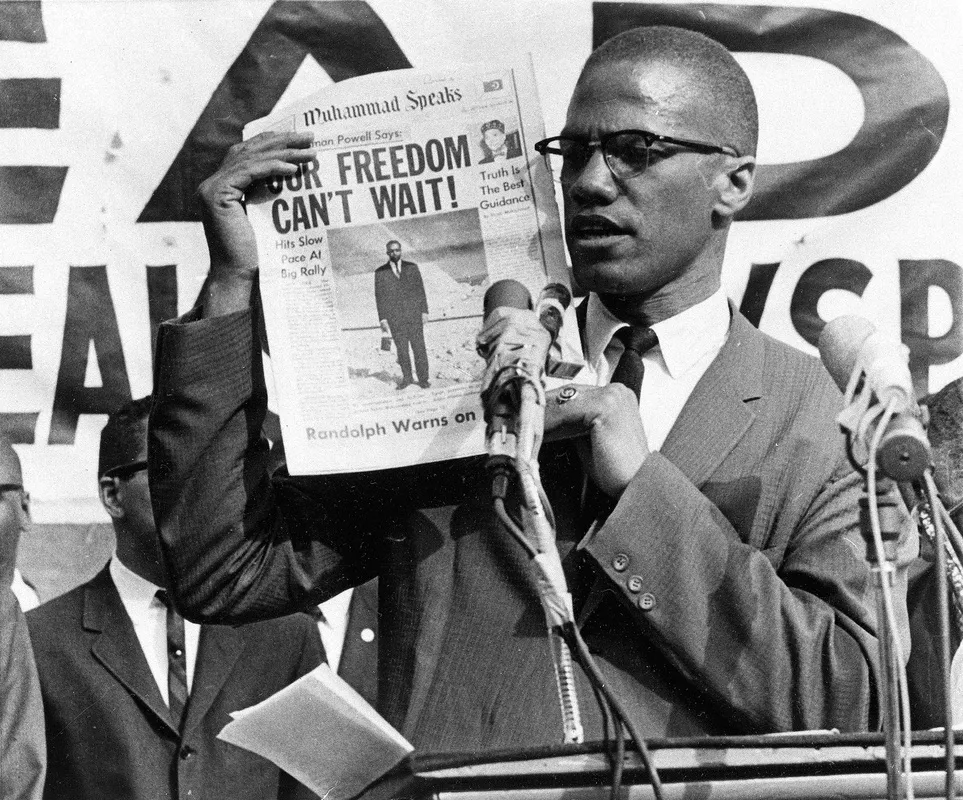 Photo: Malcolm X, via malcolmxbioinfo.weebly.com
Finding His Voice in the Hole
Marcus's real education began when he was thrown into solitary confinement for fighting. Twenty-three hours a day in a cell barely larger than a closet, with nothing but his thoughts and a stubby pencil that the guards allowed him to keep. That's when he started writing — not because anyone encouraged it, but because the alternative was losing his mind.
His first attempts were terrible: angry rants about the unfairness of his situation, poorly spelled manifestos that blamed everyone but himself for his circumstances. But gradually, something shifted. Maybe it was the enforced silence, or maybe it was the realization that no one was coming to save him, but Marcus began writing about his childhood with a clarity that surprised him.
He wrote about his mother's third job cleaning office buildings at night, how she would take him along when she couldn't find a babysitter, and how he learned to sleep curled up under desks while she worked. He wrote about the apartment with no heat where they lived for two years, and how he used to steal books from the school library not to read them, but to burn them for warmth. For the first time in his life, Marcus was telling the truth about who he was and where he came from.
The Underground Railroad of Prison Writers
Word spread through the facility that Marcus was writing, and something unexpected happened: other inmates started asking him to help them write letters home. Many were functionally illiterate, and Marcus discovered he had a talent for translating their thoughts into words that their families could understand.
This informal writing service connected him to a network of incarcerated writers throughout the California system. Letters were smuggled between facilities, carrying poems, stories, and essays written by men and women who had found their voices in the last place society expected to find literature. Marcus learned that some of America's most powerful writing had always come from its margins — from people who had nothing left to lose by telling the truth.
He began corresponding with established writers on the outside, including several who had themselves been incarcerated. They sent him books, offered feedback on his writing, and most importantly, convinced him that his story mattered. By his eighteenth birthday, Marcus was producing short stories that captured the psychological reality of incarceration with a precision that most crime writers could never achieve.
The Manuscript That Almost Died
When Marcus was released at twenty-one, he carried with him a novel he had written entirely in prison: a semi-autobiographical story about a teenager navigating the juvenile justice system. The manuscript had been typed on a ancient typewriter in the facility's vocational training center, with corrections made in pencil margins.
The publishing world wasn't interested. Agent after agent rejected the book, often with form letters that suggested they hadn't read past the first page. The few who provided feedback complained that the protagonist was "unlikeable" and that the setting was "too depressing" for commercial fiction. Marcus spent two years collecting rejection letters while working construction jobs and living in halfway houses.
The breakthrough came when a small press editor read the manuscript and recognized something that the major publishers had missed: this wasn't just a prison novel, it was American literature. The book was published in a tiny print run and initially sold fewer than a thousand copies. But those thousand readers included several influential critics who understood they were encountering a major new voice.
The Recognition That Almost Came Too Late
Marcus Williams — who by now was publishing under his real name — spent the next three decades building one of the most distinctive bodies of work in contemporary American fiction. His novels about incarceration, poverty, and redemption were praised by critics and beloved by readers who saw their own struggles reflected in his characters.
But recognition came slowly. While his white contemporaries won prestigious awards and lucrative university positions, Marcus continued working day jobs and writing at night. It wasn't until he was in his fifties that major publishers began actively courting him, and by then he had already produced the work that would define his legacy.
The irony wasn't lost on him: the same society that had written him off at sixteen was now celebrating him as a literary treasure. In interviews, he often pointed out that hundreds of other incarcerated writers possessed similar talent but would never get the chance to develop it because they lacked the combination of luck, persistence, and institutional support that had made his career possible.
The Writer Who Rewrote the Rules
Today, Marcus Williams is considered one of the essential voices in American literature, and his early novels are taught in universities across the country. But his real achievement isn't literary fame — it's proving that genius can emerge from anywhere, even from the places society has designated as hopeless.
His success has inspired prison writing programs across the country and helped change how publishers think about incarcerated authors. More importantly, it has given hope to thousands of people who are currently where he once was: forgotten, dismissed, and convinced that their stories don't matter.
Marcus Williams learned something in that juvenile facility that took him decades to fully understand: the most powerful stories come not from people who have lived comfortable lives, but from those who have had to fight for their right to exist. In the end, the courtroom that sentenced him at sixteen had inadvertently created exactly what society needed — a writer who could tell the truth about America's forgotten people because he had been one of them.
The boy they tried to throw away became the man who reminded America that redemption is always possible, one carefully chosen word at a time.