The Janitor Who Cleaned His Way Into a Fortune: How a High School Dropout Built One of America's Most Trusted Brands
When Everything Burns Down
The flames took everything. In 1961, S. Truett Cathy watched his first restaurant, the Dwarf Grill, burn to the ground. He was 40 years old, had been grinding away in the food business for nearly two decades, and now stood looking at a pile of ash where his dreams used to be.
Most people would have taken the insurance money and walked away. Cathy rolled up his sleeves and started over.
This wasn't the first time life had knocked him flat. Born Samuel Truett Cathy in 1921, he grew up dirt-poor in rural Georgia during the Great Depression. His father struggled to find steady work, and the family scraped by on whatever they could manage. When Truett was eight, his father died, leaving his mother to raise six children alone.
School wasn't in the cards. Truett dropped out of high school to help support the family, taking whatever jobs he could find. He swept floors, cleaned windows, and did the kind of work that left your hands raw and your back aching. But while other kids his age were worried about prom dates and college applications, Cathy was learning something more valuable: the dignity of honest work.
The Diner Years
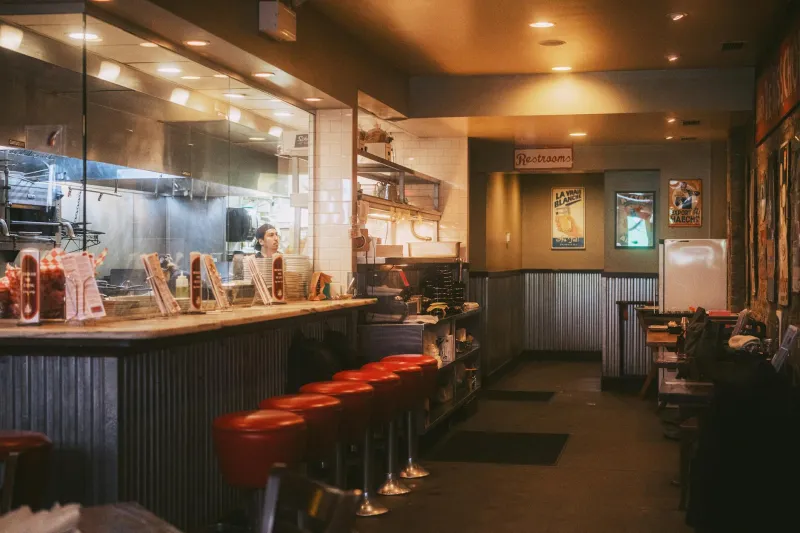
In 1946, Truett and his brother Ben scraped together $4,000 and opened a tiny diner called the Dwarf Grill in Hapeville, Georgia. It wasn't much to look at—just a handful of stools and a counter where they served simple food to working folks. The brothers worked around the clock, with Truett handling the cooking and Ben managing the front.
For fifteen years, the Dwarf Grill was their entire world. They weren't getting rich, but they were building something more important than wealth: a reputation. Customers knew that when they walked into Cathy's place, they'd get a good meal served by people who cared about getting it right.
Then came the fire.
Rising From the Ashes
While contractors rebuilt the restaurant, Cathy had time to think. He'd spent fifteen years perfecting his craft in a tiny diner, but maybe there was something bigger waiting. He'd been experimenting with a new sandwich—a seasoned chicken breast served on a buttered bun with pickles. It was simple, but it was different.
When the new restaurant opened, Cathy had a decision to make. He could play it safe and stick with what he knew, or he could bet everything on his chicken sandwich. He chose the sandwich.
The Dwarf House, as the rebuilt restaurant was called, became a testing ground for what would eventually become Chick-fil-A. But success didn't happen overnight. Cathy spent the 1960s perfecting his recipe, training his staff, and building a customer base one meal at a time. While other restaurant chains were focused on rapid expansion and cutting costs, Cathy was obsessed with doing things right.
The Slow Build
By 1967, at age 46, Cathy was ready to expand. He opened the first Chick-fil-A restaurant in Atlanta's Greenbriar Mall. It wasn't a traditional restaurant—it was a mall food court location, which was revolutionary at the time. The concept was simple: serve high-quality chicken sandwiches in places where people were already shopping.
But Cathy's approach to business was anything but typical. While competitors focused on speed and volume, he insisted on hand-breading every chicken breast. While others cut corners to maximize profits, he closed his restaurants on Sundays, giving up millions in potential revenue because he believed his employees deserved a day of rest.
Wall Street analysts called him crazy. His own advisors questioned the decision. But Cathy had learned something during those years mopping floors and flipping burgers: your reputation is built one interaction at a time, and shortcuts always catch up with you.
Building an Empire, One Store at a Time
The 1970s and 1980s saw steady, methodical growth. While McDonald's and Burger King battled for market share with aggressive expansion and price wars, Chick-fil-A grew differently. Cathy personally approved every new location. He insisted on training every franchise owner. He maintained strict quality standards even as the chain expanded.
This wasn't the fast track to wealth that modern entrepreneurs dream about. Cathy was in his fifties and sixties while building what would become a billion-dollar empire. But he understood something that many business leaders miss: sustainable success isn't about getting big fast—it's about getting better every day.
By the 1990s, Chick-fil-A had become something rare in American business: a fast-food chain that people actually trusted. Customers knew that whether they visited a location in Georgia or California, they'd get the same quality food and service. The brand had become synonymous with reliability in an industry known for cutting corners.
The Janitor's Legacy
When S. Truett Cathy died in 2014, Chick-fil-A was generating over $5 billion in annual revenue. The high school dropout who once mopped floors for a living had built one of America's most successful restaurant chains. But more importantly, he'd proven that there's still room in American business for people who believe in doing things right.
Cathy's story isn't just about chicken sandwiches or business success. It's about the power of patience in an impatient world. It's about the radical idea that treating people well—customers, employees, and communities—isn't just good morals, it's good business.
The janitor who cleaned his way to a fortune understood something that MBA programs don't teach: sometimes the longest path is actually the shortest route to where you want to go. In a world obsessed with overnight success and viral growth, Cathy's four-decade journey from the Dwarf Grill to a billion-dollar empire stands as proof that some things can't be rushed—and shouldn't be.