
When Smart People Get It Spectacularly Wrong
In 1876, a Western Union memo dismissed Alexander Graham Bell's telephone as "hardly more than a toy." In 1943, IBM's chairman predicted a world market for "maybe five computers." In 1980, McKinsey & Company advised AT&T that cell phones would never attract more than 900,000 users.
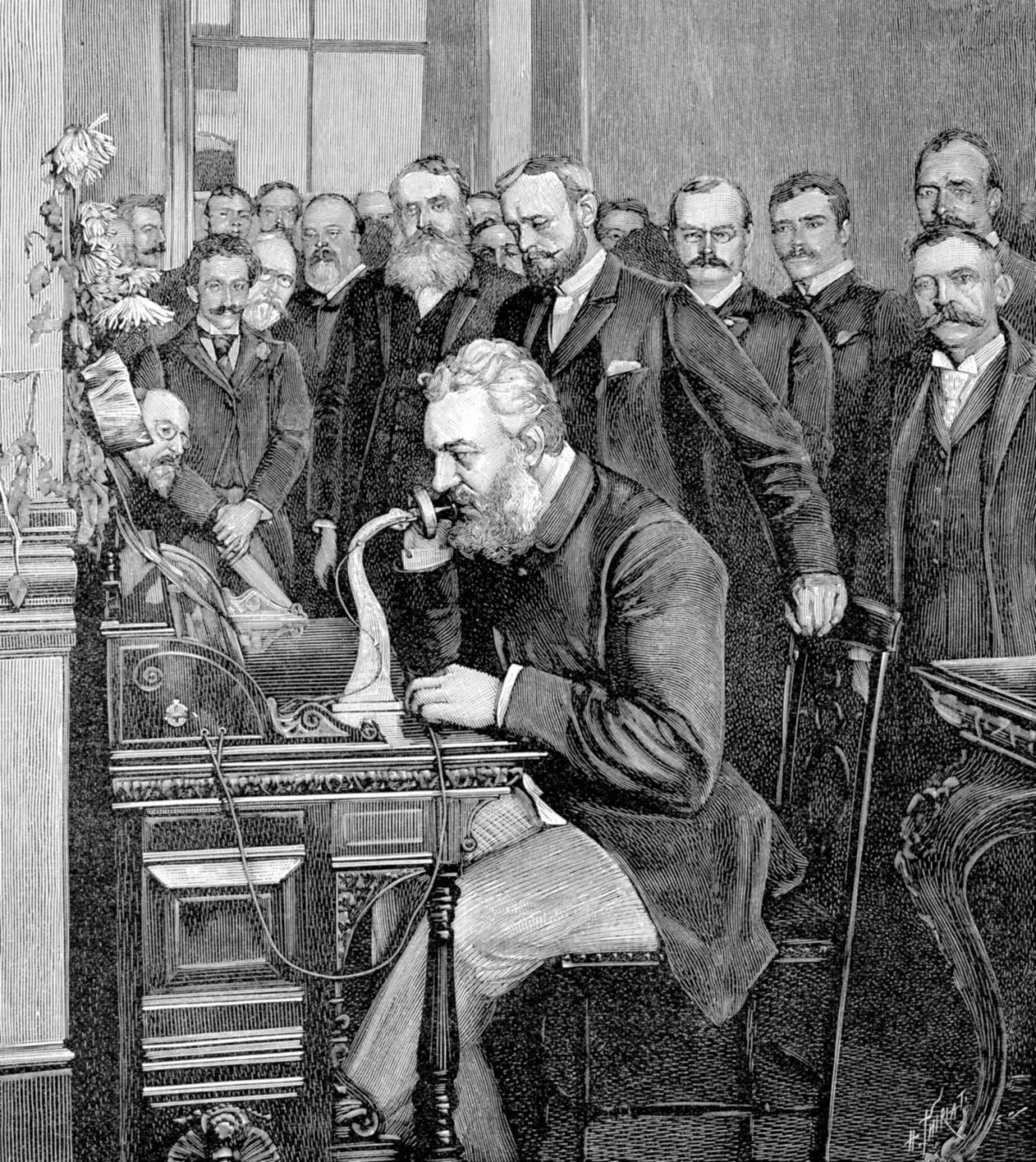 Photo: Alexander Graham Bell, via cdn.britannica.com
Expert predictions have a remarkable track record of being remarkably wrong, especially when it comes to revolutionary innovations. The pattern is so consistent it's almost suspicious: the more confidently experts dismiss an idea, the more likely that idea is to reshape the world.
Here are five American inventors whose "ridiculous" ideas survived professional mockery to become the foundation of modern life.
Alexander Graham Bell: The Man Whose 'Toy' Rewired Civilization
The Ridicule: Western Union, the telegraph giant, had first refusal rights on Bell's telephone patent. After testing the device, company executives issued an internal memo that became legendary for its shortsightedness: "This 'telephone' has too many shortcomings to be seriously considered as a means of communication. The device is inherently of no value to us."
The memo continued with devastating confidence: "What use could this company make of an electrical toy?"
The Reality: Bell had actually solved one of the 19th century's most pressing problems: instantaneous voice communication across vast distances. Telegraph systems could transmit coded messages, but the telephone transmitted something far more powerful—human emotion, tone, and immediacy.
Western Union's experts fixated on the telephone's limitations: poor sound quality, limited range, high cost. They missed its revolutionary potential: the ability to collapse distance and create intimate connections between people separated by hundreds of miles.
By 1880, just four years after that dismissive memo, there were 85,000 telephones in use across America. By 1900, the number had reached 1.4 million. Western Union, meanwhile, watched its telegraph business slowly die as the "toy" they had rejected became the nervous system of modern commerce.
Percy Spencer: The Radar Engineer Who Accidentally Invented Fast Food
The Ridicule: When Spencer discovered that radar waves could cook food (after a chocolate bar melted in his pocket during a radar experiment), Raytheon's executives were intrigued but skeptical. Early focus groups were horrified by the idea of "radiation cooking." Home economists declared it unsafe. Restaurant industry experts predicted that food cooked by radar would never taste as good as conventionally prepared meals.
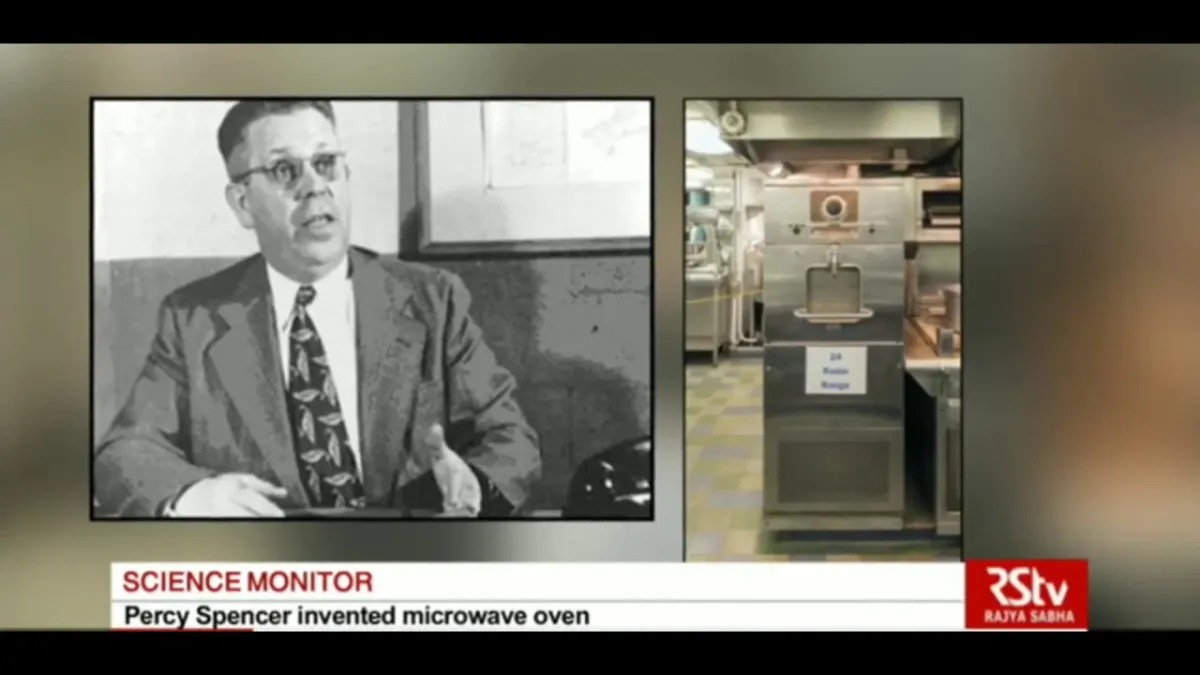 Photo: Percy Spencer, via i.ytimg.com
The first commercial microwave, the "Radarange," cost $5,000 (about $55,000 today) and weighed 750 pounds. Critics called it an expensive solution to a problem nobody had.
The Reality: Spencer understood something that food experts missed: convenience would eventually trump tradition. American lifestyles were changing rapidly in the post-war era. More women were entering the workforce, families were eating dinner later, and the demand for quick meal preparation was growing exponentially.
The microwave oven didn't just cook food faster—it democratized cooking itself. Suddenly, anyone could prepare a hot meal without culinary training or extensive preparation. By 1975, microwave ovens were outselling gas ranges. Today, over 90% of American homes have microwaves, making Spencer's "dangerous" invention more ubiquitous than dishwashers.
Chester Carlson: The Patent Clerk Whose Copying Machine Was 'Unnecessary'
The Ridicule: Carlson spent seven years trying to sell his photocopying process to major corporations. IBM, Kodak, and General Electric all passed, convinced there was no market for an expensive machine that duplicated documents. One executive reportedly told him, "Who needs copies when you have carbon paper?"
Twenty companies rejected Carlson's invention before Haloid Corporation (later Xerox) finally licensed the technology in 1947. Even then, Haloid's own consultants predicted the machine would never sell more than a few thousand units.
The Reality: Carlson had identified a hidden inefficiency in every office in America. Before photocopying, document reproduction required carbon paper, mimeograph machines, or expensive offset printing. Each method was slow, messy, or prohibitively costly for small quantities.
The first commercial Xerox machine, introduced in 1959, transformed office work overnight. Businesses that had never made copies suddenly found hundreds of uses for instant document reproduction. By 1961, Xerox revenues had grown from $37 million to $60 million. By 1965, they reached $500 million. The "unnecessary" copying machine had created an entirely new industry.
Edwin Land: The College Dropout Who Made Instant Photography 'Impossible'
The Ridicule: When Land announced his plan to create instant photography in 1943, Kodak's executives were dismissive. The chemistry required to develop photographs inside a camera seemed impossibly complex. Photography experts argued that film processing required precise temperature and timing controls that couldn't be achieved in a portable camera.
Even Land's financial backers were skeptical. Why would consumers pay premium prices for lower-quality instant photos when commercial processing was cheap and produced superior results?
The Reality: Land understood that photography was becoming more than just documentation—it was becoming social interaction. Instant photos allowed people to share moments immediately, transforming cameras from recording devices into conversation starters.
The first Polaroid cameras, introduced in 1948, sold out their initial production run in a single day. By the 1970s, Polaroid was generating over $1 billion in annual revenue. Land's "impossible" instant photography had created an entirely new category of social experience, one that would eventually evolve into the photo-sharing culture that dominates social media today.
Wilson Greatbatch: The Engineer Whose Heart Device Was 'Too Risky'
The Ridicule: When Greatbatch invented the implantable pacemaker in 1958, medical experts were horrified by the idea of putting electronic devices inside human bodies. Surgeons worried about infection risks. Cardiologists questioned whether patients would accept "artificial" heartbeats. Medical device companies refused to manufacture what they saw as a dangerous experimental gadget.
The FDA was equally skeptical, requiring extensive testing before approving what regulators considered an unnecessarily risky device for treating a condition that could be managed with external pacemakers.
The Reality: Greatbatch had solved a problem that external pacemakers couldn't address: mobility and quality of life. Patients tethered to external pacing devices were essentially imprisoned in hospitals. Implantable pacemakers offered something revolutionary—the chance to live normal lives despite serious heart conditions.
The first implantable pacemaker was used successfully in 1960. Within a decade, the devices were being implanted in thousands of patients annually. Today, over 600,000 pacemakers are implanted worldwide each year, extending millions of lives that would have been lost to heart rhythm disorders.
The Pattern Behind the Mockery
Each of these innovations shared common characteristics that made them easy targets for expert dismissal:
- They solved problems people didn't know they had
- They required changes in behavior or infrastructure
- Their early versions were expensive and imperfect
- They threatened existing industries and expertise
But the inventors persisted because they saw something experts missed: human behavior is remarkably adaptable when the benefits are clear. People will pay premium prices for convenience, accept imperfect technology that improves over time, and abandon familiar methods for superior alternatives.
The Mockery Continues
Today's experts are undoubtedly dismissing tomorrow's world-changing innovations with the same confident skepticism their predecessors applied to telephones and microwave ovens. The next time you hear an expert confidently predict that a new technology will never catch on, remember: mockery might be the most reliable early indicator that someone is building something genuinely revolutionary.
After all, if the experts understood what was coming, it probably wouldn't be revolutionary.