The Kitchen Without Rules: How an Immigrant's 'Wrong' Way of Cooking Became America's Right Way
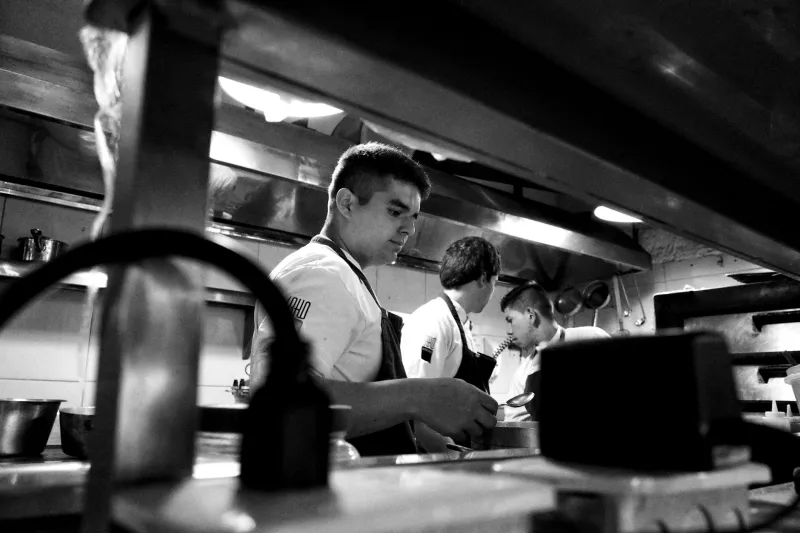
The Woman Who Cooked by Heart
Esperanza Morales arrived in Chicago in 1963 with $27 in her pocket, three children clinging to her skirt, and not a single word of English on her tongue. What she did have was a lifetime of watching her grandmother transform humble ingredients into magic in a tiny kitchen in Michoacán.
No culinary school had taught her to balance spices. No cookbook had shown her how to coax flavor from bones. Everything Esperanza knew about cooking lived in her hands, her nose, and her memory of meals that had fed families through generations of hardship.
America was about to get an education it didn't know it needed.
The Accidental Restaurant
Esperanza's first job was cleaning offices downtown, working nights so she could care for her children during the day. To save money, she packed elaborate lunches—not the simple sandwiches her coworkers brought, but complex combinations of flavors that made the break room smell like a festival.
Her supervisor, a middle-aged Irish-American woman named Margaret O'Brien, became curious about the aromatic packages Esperanza unwrapped each midnight. "What is that?" she asked one night, gesturing at a container of what looked like ordinary chicken but smelled extraordinary.
Esperanza didn't have the English to explain her grandmother's technique of marinating poultry in citrus and chile, then slow-braising it with vegetables that most Americans had never heard of. Instead, she simply offered Margaret a bite.
That first taste changed everything.
The Language of Flavor
Within weeks, Margaret was paying Esperanza to prepare her lunches. Soon, other office workers were placing orders. Esperanza found herself running an underground cafeteria from her South Side apartment, cooking for dozens of customers who couldn't pronounce the names of her dishes but couldn't stop eating them.
The problem was communication. Esperanza's customers wanted to know what made her food so different, but she lacked the vocabulary to explain techniques that she'd absorbed through observation rather than instruction. Her "recipes" existed only in the movement of her hands and the timing she felt in her bones.
So she did what cooks have done for millennia: she taught through feeding.
Breaking the Rules That Never Made Sense
When Esperanza finally opened her tiny restaurant in 1968—Corazón's Kitchen, named after the heart she believed every dish needed—she horrified professional cooks with her methods. She had no standardized portions, no written recipes, no formal training in food safety or restaurant management.
What she had was an intuitive understanding of how flavors married, how textures played against each other, and how the same basic ingredients could be transformed into dozens of different experiences depending on technique and timing.
Her mole negro took three days to prepare and required twenty-eight different ingredients, many of which she had to drive to Mexican markets hours away to find. Food critics who discovered her restaurant couldn't understand how someone with no formal training could create such complex, nuanced dishes.
They were asking the wrong question. Esperanza hadn't learned to cook—she'd learned to taste.
The Education of American Palates
Corazón's Kitchen occupied a narrow storefront that seated maybe thirty people, but its influence spread far beyond its modest walls. Food writers began making pilgrimages to the South Side to experience what one Chicago Tribune critic called "the most honest cooking in the city."
Esperanza's approach was revolutionary precisely because it ignored the rules that formal cooking had established. She combined techniques from different Mexican regions that purists said shouldn't go together. She adapted traditional recipes using ingredients available in American supermarkets, creating hybrid dishes that were authentically hers rather than authentically anything else.
More importantly, she treated American comfort foods—pot roast, fried chicken, even meatloaf—as blank canvases for the flavor principles she'd learned in Mexico. Her "American" dishes tasted like nothing American diners had experienced before.
The Ripple Effect
By the mid-1970s, young chefs from established restaurants were staging unpaid shifts at Corazón's Kitchen, trying to understand Esperanza's techniques. She couldn't explain her methods in culinary school terminology, but she could show them how to taste their way to better cooking.
Chef Thomas Morrison, who would later open three acclaimed restaurants in Chicago, credited Esperanza with teaching him "to cook with my mouth instead of my head." Julia Chen, who became one of the first Asian-American chefs to win a James Beard Award, said watching Esperanza work taught her "that authenticity isn't about following rules—it's about following your palate."
Esperanza's influence extended beyond professional kitchens. Home cooks throughout Chicago began incorporating her techniques into their own family recipes. The city's food culture was quietly transforming, one meal at a time.
The Cookbook That Broke the Mold
In 1982, food writer Patricia Williams convinced Esperanza to collaborate on a cookbook. The project took three years because Esperanza's recipes existed only in practice, not on paper. Williams had to watch Esperanza cook the same dish dozens of times, taking notes on every gesture, every pause, every seemingly instinctive decision.
The resulting book, "Cooking from the Heart: Esperanza's Kitchen," became a bestseller precisely because it captured something most cookbooks missed: the emotional intelligence of cooking. Instead of rigid measurements, it offered guidance on how to taste and adjust. Instead of step-by-step instructions, it taught readers to recognize when a dish was ready through sight, smell, and intuition.
Legacy in Every Bite
Esperanza Morales never became a celebrity chef or opened a restaurant empire. When she retired in 1995, Corazón's Kitchen closed with her. But her influence on American cooking was permanent.
Today's farm-to-table movement, with its emphasis on seasonal ingredients and intuitive cooking, owes a debt to cooks like Esperanza who never forgot that great food comes from understanding ingredients rather than following formulas. The fusion cuisine that defines modern American dining traces its roots to immigrant cooks who weren't afraid to break rules they'd never learned in the first place.
Esperanza Morales proved that the best teachers are often those who can't explain what they know—they can only show you how it tastes. In a culture obsessed with credentials and formal training, she reminded America that the most profound knowledge often lives in the hands of people who learned by doing, not by studying.
Sometimes the most American story of all is the one told by someone who never thought of herself as American—just as someone who knew how to make people happy, one meal at a time.