From Ledgers to Empire: The Dirt-Poor Preacher's Kid Who Cornered America's Oil
The Boy Who Tracked Every Penny
In 1850s Cleveland, while other kids played marbles in the dirt, ten-year-old John Davison Rockefeller hunched over a worn notebook, recording every cent that passed through his small hands. Three cents for helping a neighbor move firewood. A nickel for running an errand. Two cents found on the sidewalk. Each transaction went into his ledger with the precision of a bank clerk.
This wasn't the behavior of a typical child. But John D. Rockefeller wasn't growing up in typical circumstances.
His father, William "Big Bill" Rockefeller, was a traveling con man who sold fake cancer cures and disappeared for months at a time, leaving his wife Eliza to raise six children on whatever money she could scrape together. When Big Bill did return, he'd flash rolls of cash before vanishing again, teaching young John that money was both powerful and unreliable.
"I was trained from the beginning to work, to save, and to give," Rockefeller would later recall. But what he learned wasn't just thrift—it was survival.
Building Order from Chaos
Eliza Rockefeller, a devout Baptist, held the family together through sheer force of will and religious discipline. She taught her children that waste was sinful, that every resource had value, and that order could triumph over uncertainty. For John, these lessons became gospel.
By age twelve, he was lending money to local farmers at 7% interest—higher than most banks charged. He'd saved fifty dollars, a fortune for a kid whose family sometimes went hungry, and he understood that money could work as hard as muscle if you knew how to deploy it.
While his father taught him that the world was full of marks waiting to be fooled, his mother showed him that methodical discipline could create stability from nothing. The combination would prove lethal to his future competitors.
The $4,000 Gamble That Changed Everything
At nineteen, Rockefeller borrowed $1,000 from his father (at 10% interest, naturally) and convinced a partner to put up $3,000 more. Together, they started a produce business in Cleveland's bustling commercial district. While other young men his age were still figuring out their next meal, Rockefeller was already thinking in systems.
He didn't just sell grain—he studied every aspect of the supply chain. Who grew the best crops? Which railroads offered the most reliable shipping? How could he cut costs that competitors couldn't see? The meticulous record-keeping habits he'd developed as a child became the foundation for understanding entire markets.
When oil was discovered in Pennsylvania in 1859, most people saw a get-rich-quick opportunity. Rockefeller saw something different: chaos that needed organizing.
The Refinery That Ate the World
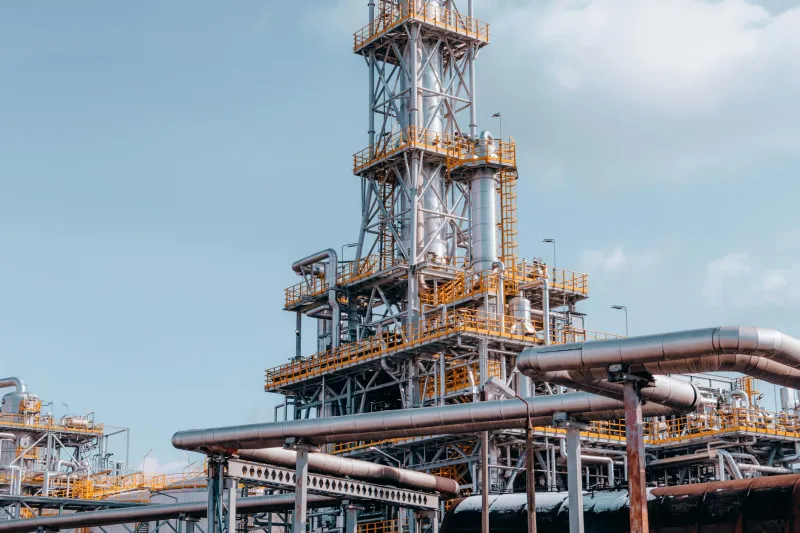
In 1863, Rockefeller and his partners built their first oil refinery in Cleveland. While other entrepreneurs rushed to drill wells, hoping to strike it rich, Rockefeller focused on refining—the unglamorous middle step that turned crude oil into usable kerosene.
His approach was methodical, almost obsessive. He studied every aspect of the refining process, finding ways to use byproducts that competitors threw away. Sulfuric acid waste became fertilizer. Oil residue became lubricating grease. Nothing was wasted, everything had value—lessons learned from a childhood where waste meant hunger.
But Rockefeller's real genius wasn't in efficiency—it was in understanding that the oil business was really about transportation. Whoever controlled how oil moved from refineries to customers would control everything.
The Art of the Deal (and the Squeeze)
By 1870, Rockefeller had formed Standard Oil Company. His strategy was simple in concept, ruthless in execution: buy out competitors, negotiate secret deals with railroads for shipping discounts, and slowly strangle anyone who refused to sell.
The boy who'd learned to distrust from his con-man father now used that skepticism to outmaneuver businessmen who thought handshake deals meant something. The child who'd counted every penny now deployed capital with surgical precision, buying rivals during economic downturns when they were desperate.
"The way to make money is to buy when blood is running in the streets," he once observed—a philosophy born from watching his family survive when others couldn't.
The Monster Success Creates
By 1879, Standard Oil controlled 90% of America's oil refining capacity. Rockefeller had become the richest private citizen in American history, worth an estimated $400 billion in today's money. The poor preacher's kid who'd tracked pennies in a notebook now controlled an empire that touched every aspect of American life.
But success came with a price. Critics called him a robber baron, a monopolist who'd crushed competition and manipulated markets. The boy who'd learned order from his mother's discipline had created a machine so efficient it threatened the very idea of free enterprise.
The Reckoning
In 1911, the Supreme Court ordered Standard Oil broken into 34 separate companies—including what would become Exxon, Mobil, and Chevron. Rather than destroying Rockefeller's wealth, the breakup actually increased it, as shares in the smaller companies proved more valuable than the original monopoly.
The man who'd started with nothing and built everything had learned the ultimate lesson: sometimes you have to lose the battle to win the war.
John D. Rockefeller died in 1937, having given away more than $500 million to charity—more than most billionaires today donate in their entire lifetimes. The boy who'd learned to count pennies from necessity ended up reshaping how America thought about both wealth and philanthropy.
His empire rose from the ruins of a chaotic childhood, proving that sometimes the greatest strengths emerge from the deepest insecurities. In Rockefeller's case, the fear of poverty and abandonment forged the discipline that would dominate an entire industry—and change the world.