Canvas Behind Bars: The Condemned Man Who Painted His Soul Into Freedom
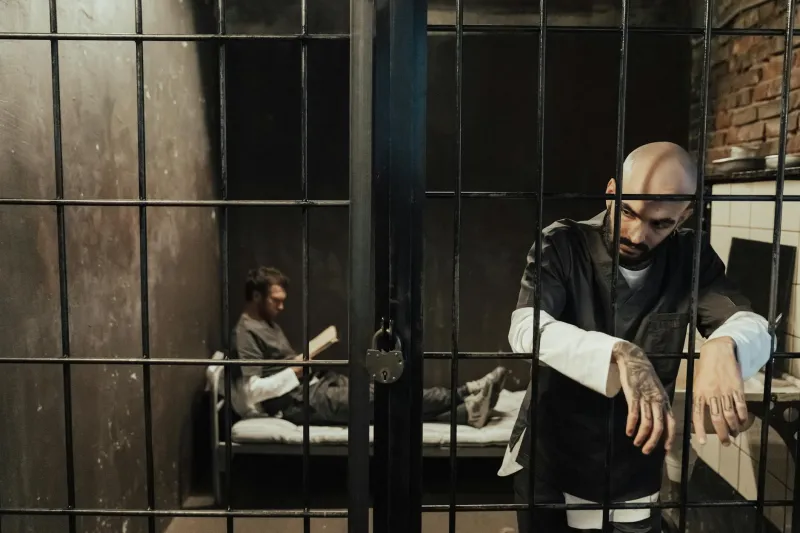
The Cell That Became a Studio
The concrete walls of Louisiana State Penitentiary weren't built for inspiration. They were built to contain, to punish, to erase. But in 1965, behind those walls, something unexpected was taking shape on scraps of cardboard and stolen canvas.
Billy Wayne Sinclair had been sentenced to die. The electric chair waited, patient and certain. Most men in his position counted days, wrote letters, or simply waited for the inevitable. Sinclair started painting.
It began with whatever he could find—coffee grounds for brown, crushed flowers for yellow, his own blood when red was needed. The guards thought he was losing his mind. They had no idea he was finding his soul.
When Desperation Meets Discovery
Sinclair's story starts like too many others in America's justice system. Born into poverty in rural Louisiana, he'd bounced between foster homes and juvenile facilities before landing on death row at twenty-two. The crime that put him there was brutal, senseless—the kind that makes headlines and breaks hearts.
But somewhere in that concrete tomb, surrounded by the sounds of despair and institutional routine, Sinclair discovered something that would change everything. Art wasn't just a way to pass time; it was a lifeline to something larger than the cage they'd put him in.
His first paintings were rough, untrained, raw with emotion. Prison officials initially saw them as contraband—another rule to enforce, another privilege to revoke. What they didn't see was the transformation happening stroke by stroke, color by color.
The Masterpiece They Couldn't Execute
As years passed and legal appeals crawled through the courts, Sinclair's work evolved. Self-taught and relentless, he developed a style that art critics would later describe as "haunting" and "brutally honest." His paintings captured not just the physical reality of prison life, but something deeper—the human spirit's refusal to surrender even when the world has officially given up.
Word of his talent began to leak beyond the prison walls. A local newspaper ran a small story. Then a magazine picked it up. Art collectors started asking questions. By the 1970s, galleries in New Orleans were displaying work created in a cell measuring six by nine feet.
The irony wasn't lost on anyone: the state had condemned this man to death, but his art was very much alive, speaking to people who would never know his name or his crime.
Recognition Behind Razor Wire
Sinclair's breakthrough came when the New Orleans Museum of Art acquired one of his pieces—a stark, powerful portrait that seemed to stare directly into the viewer's conscience. Suddenly, the art world was paying attention to a voice they'd never expected to hear.
Critics struggled with the contradiction. How do you celebrate the work of someone society has deemed irredeemable? How do you separate the artist from the crime? These weren't comfortable questions, but they were necessary ones.
Sinclair's paintings began selling for thousands of dollars. Money he'd never touch, success he'd never fully enjoy, but proof that even in America's most forgotten corners, genius could take root and flourish.
The Canvas That Opened Doors
In 1972, Sinclair's death sentence was commuted to life in prison—not because of his art, but because of changing legal precedents. Still, his growing reputation as an artist had given him something invaluable: a voice that reached beyond the walls.
He used that voice carefully, thoughtfully. His later works tackled themes of justice, redemption, and the possibility of change. Museums across the South began featuring his pieces in exhibitions about art and social justice. Students studied his techniques. Critics debated his impact.
The man they'd tried to erase had become impossible to ignore.
Beyond the Brushstrokes
Sinclair's story forces uncomfortable questions about second chances, human worth, and the purpose of punishment. His art didn't erase his crime or excuse his actions, but it proved something important: even people society has written off completely can contribute something meaningful to the world.
After serving more than forty years, Sinclair was eventually released on parole. By then, he was in his sixties, his hair gray, his hands still steady enough to hold a brush. The art world that had discovered him behind bars welcomed him into the light.
His paintings now hang in permanent collections across America. They serve as testament to a simple but profound truth: creativity doesn't ask permission from society before it emerges. It doesn't wait for approval or ideal conditions. Sometimes it blooms most powerfully in the places we least expect to find it.
The Portrait of Possibility
Today, Sinclair's work continues to challenge viewers to think differently about redemption, punishment, and human potential. His story isn't a simple tale of good triumphing over evil—it's messier and more complex than that. It's about what happens when society's most discarded people refuse to discard themselves.
In a culture quick to write people off, Sinclair's brushstrokes remind us that human beings are more than their worst moments. Sometimes the most beautiful art comes from the ugliest circumstances. Sometimes the most powerful voices emerge from the places we've tried hardest to silence.
The walls of Louisiana State Penitentiary still stand, gray and imposing as ever. But somewhere in those corridors, the ghost of possibility lingers—proof that even when the world gives up on someone, they don't have to give up on themselves.