Recipes Written Behind Bars: The Woman Who Changed American Home Cooking From the Inside
A Name Nobody Remembered
If you've ever made a slow-cooked stew and instinctively added a splash of vinegar near the end, or learned that the secret to good cornbread is letting the batter rest before it hits the pan, there's a decent chance you inherited that knowledge from someone who inherited it from someone who once read a pamphlet they couldn't quite trace back to its source.
That source, in a surprising number of cases, was Bessie Crane.
Crane spent nearly a decade incarcerated at a women's correctional facility in the rural South during the 1930s and early 1940s. She entered the system as a young woman with a modest reputation as a gifted home cook and left it as something considerably more significant — though the world wouldn't fully understand that for another generation.
Hers is not a tidy story. It is a story about genius finding its shape in the most unlikely container imaginable.
What She Carried In
Bessie Crane grew up in a Georgia community where food was both sustenance and language. Her mother cooked the way some people pray — with full attention and a kind of faith that the process mattered as much as the outcome. Bessie absorbed that worldview early. By her teenage years she was known in her neighborhood for dishes that were somehow both humble and precise: biscuits with a specific crumb structure, greens cooked to a tenderness that took most cooks twice as long to achieve, sauces that people described as tasting like something they'd been missing without knowing it.
The circumstances of her conviction are complicated and, by most assessments of people who've looked carefully at the record, deeply unjust — a story not uncommon for Black women in the American South during that era. What matters here is not the charge but what Crane did with the time.
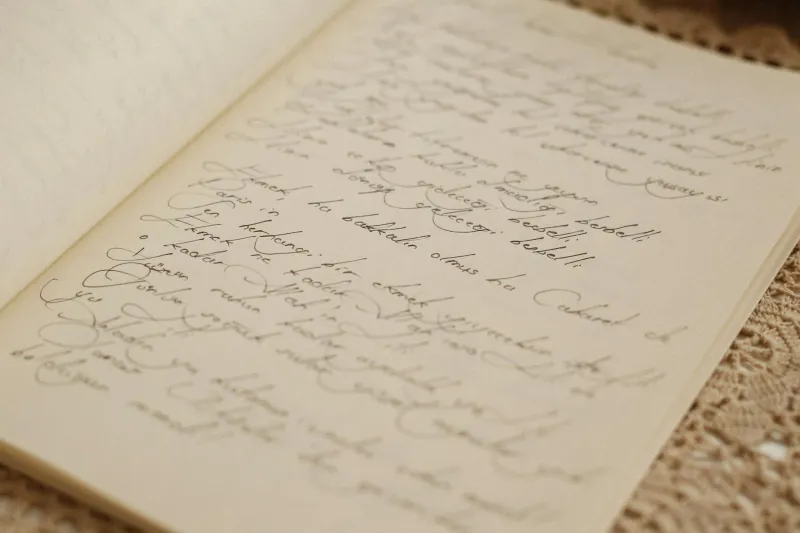
She asked for paper. Then she started writing.
The Kitchen That Existed on Paper
The facility where Crane was held assigned incarcerated women to food preparation, which meant she had more access to a working kitchen than most inmates. But her real work happened in her cell, in the margins of whatever paper she could get her hands on, in a project that began as a personal record and grew into something she could only have described as a life's work.
Crane wrote down recipes, but that description undersells what she was actually doing. She wrote down why recipes worked. She described the chemical logic of leavening before she had the vocabulary for chemistry. She documented the way different fats behaved at different temperatures, the relationship between acid and texture in baked goods, the way salt functions not just as seasoning but as a structural element in certain preparations.
She was, in the language of a much later culinary culture, writing about technique. And she was doing it in plain, practical language designed for home cooks who had no formal training and no access to professional equipment.
"She wasn't writing for chefs," said one food historian who spent years reconstructing Crane's story from archival fragments. "She was writing for women who cooked on wood stoves with whatever was in the root cellar. She was writing for herself, and for everyone she'd ever cooked with."
How the Work Got Out
When Crane was released in the early 1940s, she carried her manuscripts with her. She spent several years in Chicago, where she connected with a network of church communities and neighborhood organizations that published small domestic guides and cooking pamphlets for distribution in Black households.
Crane's material began appearing in these publications in the mid-1940s, often without a byline, sometimes attributed to a collective, occasionally credited to a pseudonym. The pamphlets circulated widely in Black communities across the Midwest and South. Some of the techniques and formulations migrated into church cookbooks, community recipe collections, and eventually into the informal oral tradition that shapes how families cook across generations.
She received almost no recognition and very little money. The publishing networks she worked through were not built for attribution or royalties. Crane continued cooking, continued teaching informally, and continued writing until her death in 1967.
The Flavor of Forgotten Genius
The food world's rediscovery of Bessie Crane has been slow and incomplete. A handful of culinary historians have documented her contributions with care and seriousness, tracing specific techniques back to her manuscripts with the kind of archival detective work that most people don't know food history requires.
What they've found is striking. Crane's understanding of flavor layering, her approach to building depth in simple dishes without expensive ingredients, her insistence that timing and temperature mattered more than elaborate technique — these ideas are now considered foundational in serious home cooking circles. She arrived at them through years of enforced reflection, without a test kitchen, without a publisher, without any of the institutional support that typically produces culinary innovation.
Confinement gave her something that professional kitchens often destroy: time to think without interruption, and a reason to be precise because imprecision had nowhere to hide on paper.
There is something both beautiful and painful about a story like Bessie Crane's. Beautiful because the work survived. Painful because the name almost didn't. Her story is a reminder that American food culture — like American culture broadly — is built on contributions that were never properly credited, from people who were never properly seen.
She cooked from memory, from instinct, and eventually from a set of principles she developed in a place that was meant to silence her. The food got out anyway. And somewhere in the way Americans still cook today, her fingerprints are all over the dish.