
The Sound That Haunted a Fortune
Andrew Carnegie never forgot the sound of his mother's sewing machine working late into the Scottish nights, desperately trying to keep food on the table after his father's weaving business collapsed. That rhythmic clicking would echo in his mind decades later as he signed away hundreds of millions of dollars, driven by a conviction that would have seemed insane to his Gilded Age peers: dying wealthy was a moral failure.
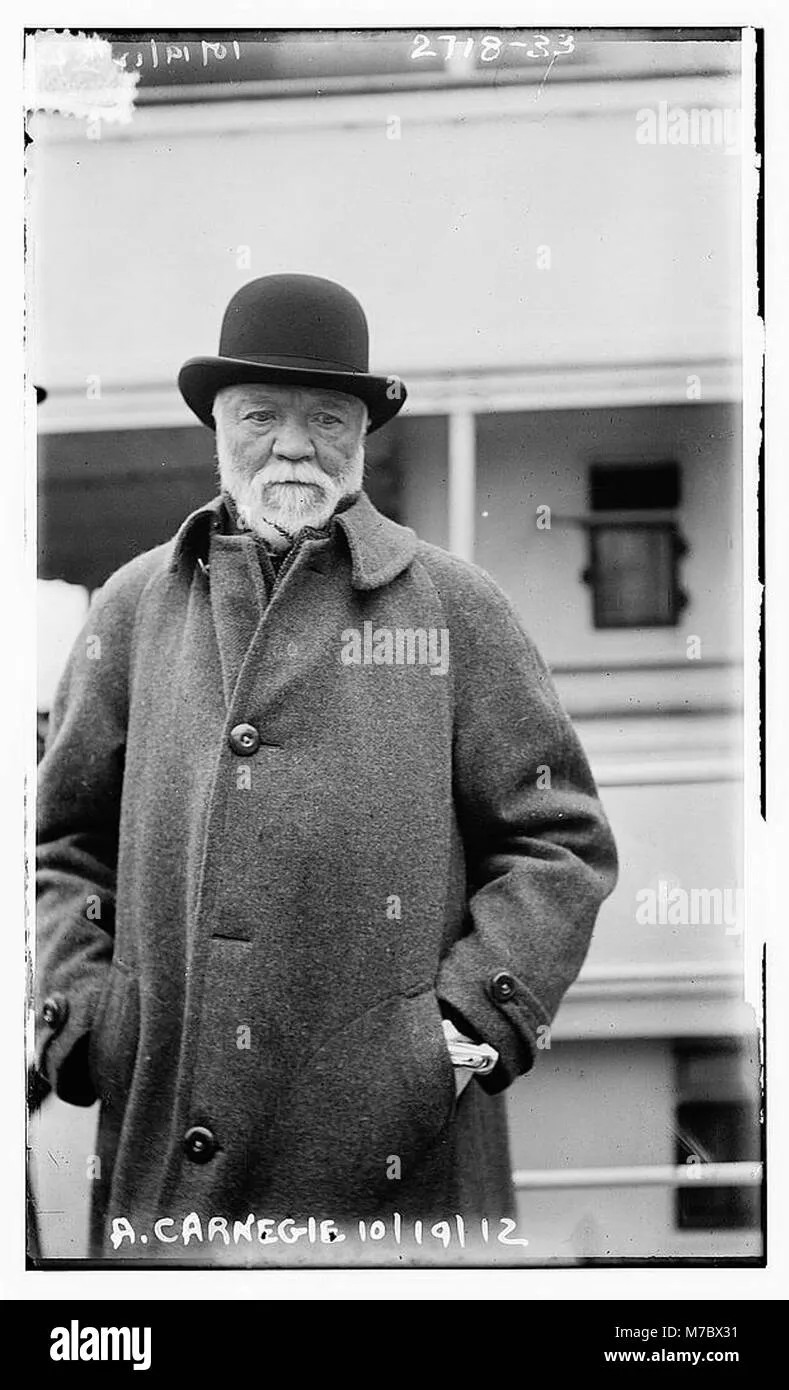 Photo: Andrew Carnegie, via c8.alamy.com
In 1848, when thirteen-year-old Andrew stepped off the boat in New York Harbor, his family carried exactly $7.50 between them. Within months, he was working twelve-hour shifts in a Pittsburgh cotton mill, earning $1.20 a week as a bobbin boy — the lowest rung on the industrial ladder. His hands bled from handling the rough cotton threads, and the factory air was so thick with lint that workers developed chronic coughs that never quite went away.
But Carnegie possessed something that couldn't be bought or inherited: an almost pathological hunger for self-improvement. While other mill workers spent their evenings in taverns, he haunted the local library, devouring books on everything from Shakespeare to engineering. He taught himself telegraphy by practicing Morse code with a homemade device, tapping out messages on his bedpost until his neighbors complained.
The Telegraph Key That Unlocked Everything
His break came through pure audacity. When the Pennsylvania Railroad needed a telegraph operator, Carnegie talked his way into the job despite having no formal training. At seventeen, he was earning $35 a month — more than his father had ever made. But the real education came from watching how American business actually worked from the inside.
 Photo: Pennsylvania Railroad, via thumbs.dreamstime.com
Working directly under railroad superintendent Thomas Scott, Carnegie learned that information was power, and timing was everything. He watched Scott manipulate stock prices with insider knowledge, saw how government contracts were really awarded, and understood that in America, the rules were written by whoever had the most money to write them.
The Civil War became Carnegie's business school. While others saw tragedy, he saw opportunity. His railroad connections put him at the center of the Union's logistics network, and he parlayed that access into investments in oil, bridges, and eventually steel. But every deal was driven by the same terror that had kept his mother sewing past midnight: the fear of being poor again.
The Empire Built on Borrowed Time
By the 1870s, Carnegie had transformed American steel production through a combination of technological innovation and ruthless cost-cutting. His Homestead Steel Works could produce more steel in a day than entire countries managed in a year. But his success came at a human cost that would have been familiar to his thirteen-year-old self in that Pittsburgh cotton mill.
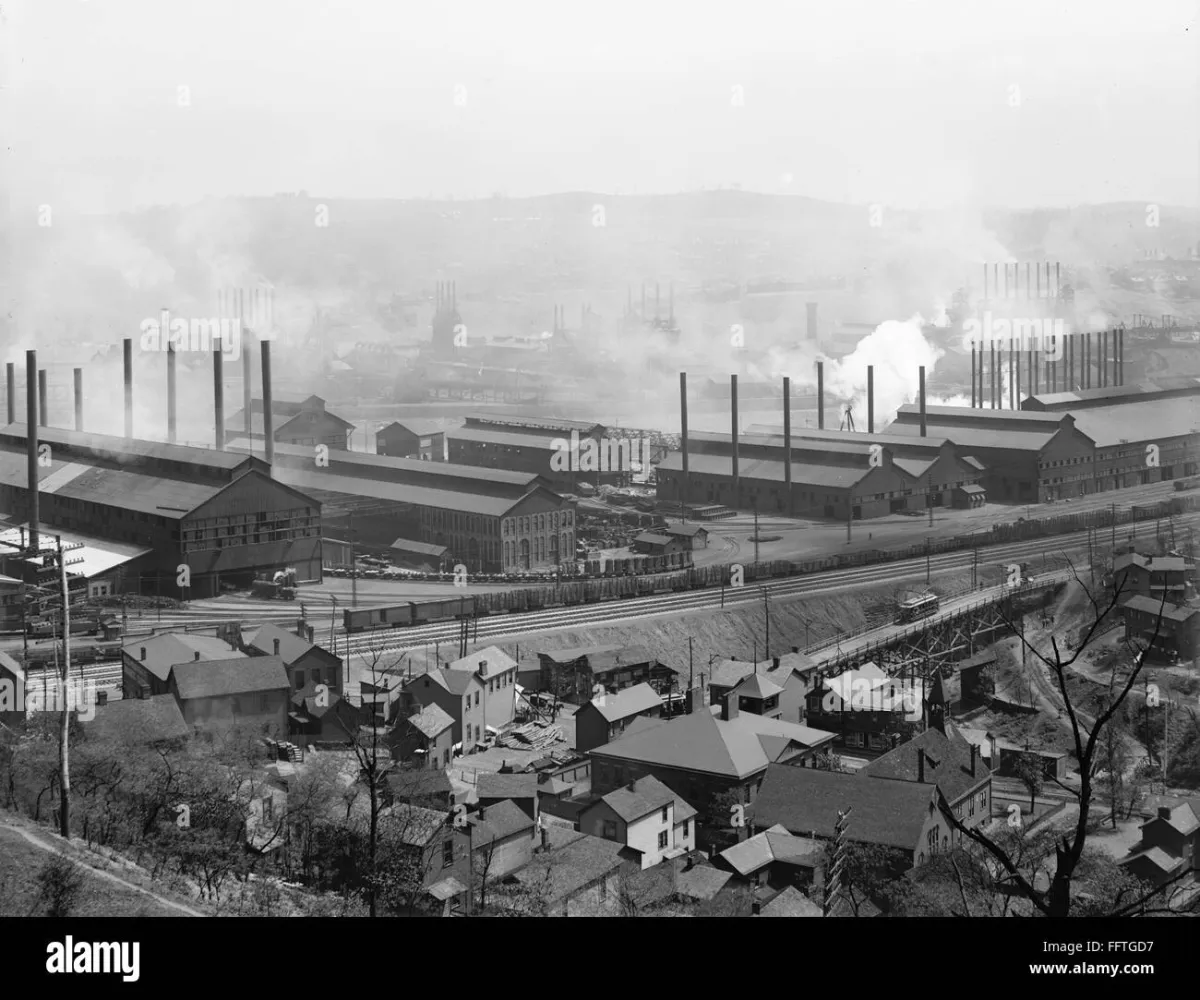 Photo: Homestead Steel Works, via c8.alamy.com
Workers at his plants endured twelve-hour shifts in temperatures that regularly exceeded 120 degrees. Industrial accidents were so common that local newspapers stopped reporting them unless multiple people died. When his workers tried to organize for better conditions, Carnegie's response was swift and brutal — most famously during the 1892 Homestead Strike, where private security forces killed several workers.
Yet even as he was building one of history's most profitable empires, Carnegie was developing a philosophy that would shock his fellow robber barons. In his 1889 essay "The Gospel of Wealth," he argued that accumulating vast fortunes was only morally acceptable if you gave them away before you died. "The man who dies rich," he wrote, "dies disgraced."
The Psychology of Giving It All Away
Carnegie's philanthropy wasn't just charity — it was an attempt to solve the psychological puzzle of his own success. How do you reconcile becoming fabulously wealthy in a system that crushes people exactly like your younger self? His answer was to try to level the playing field for the next generation.
He funded 2,509 libraries across America, focusing on small towns and immigrant communities that reminded him of his own origins. Each library came with one condition: the community had to commit to keeping it running forever. Carnegie understood that knowledge was the only reliable ladder out of poverty, because it was the one thing no economic downturn could take away.
Between 1901, when he sold his steel company to J.P. Morgan for $480 million, and his death in 1919, Carnegie gave away over $350 million — roughly $5 billion in today's money. He funded universities, peace organizations, and scientific research, always with the same underlying message: society owed its most vulnerable members a fighting chance.
The Legacy That Outlived the Fortune
Carnegie's real revolution wasn't in steel production — it was in redefining what American success could look like. In a culture obsessed with accumulating wealth, he argued that the ultimate measure of a life was how much you gave away, not how much you kept.
That philosophy would influence everyone from John D. Rockefeller to modern tech billionaires like Bill Gates and Warren Buffett. The Giving Pledge, which commits the world's wealthiest individuals to donate the majority of their fortunes, is a direct descendant of Carnegie's "Gospel of Wealth."
But perhaps Carnegie's most lasting insight was psychological: he understood that extreme poverty and extreme wealth were both forms of imprisonment. The poor are trapped by lack of opportunity; the rich are trapped by the meaninglessness of endless accumulation. His libraries and universities were designed to free people from the first trap, while his philanthropy freed him from the second.
The boy who once bled over cotton threads in a Pittsburgh mill had learned that the only way to truly escape poverty was to ensure that others could escape it too. In the end, Andrew Carnegie's greatest product wasn't steel — it was hope.